




Description
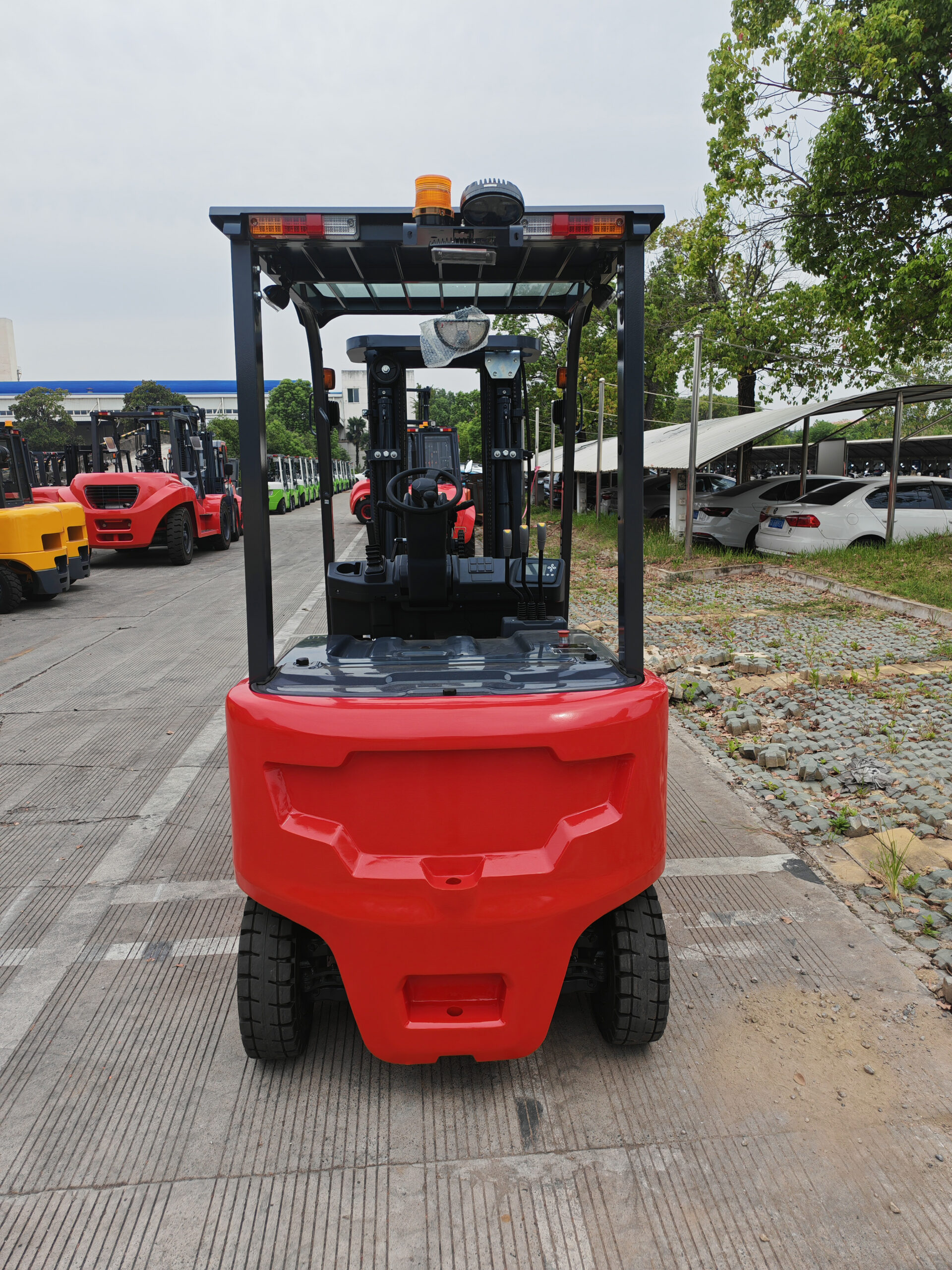
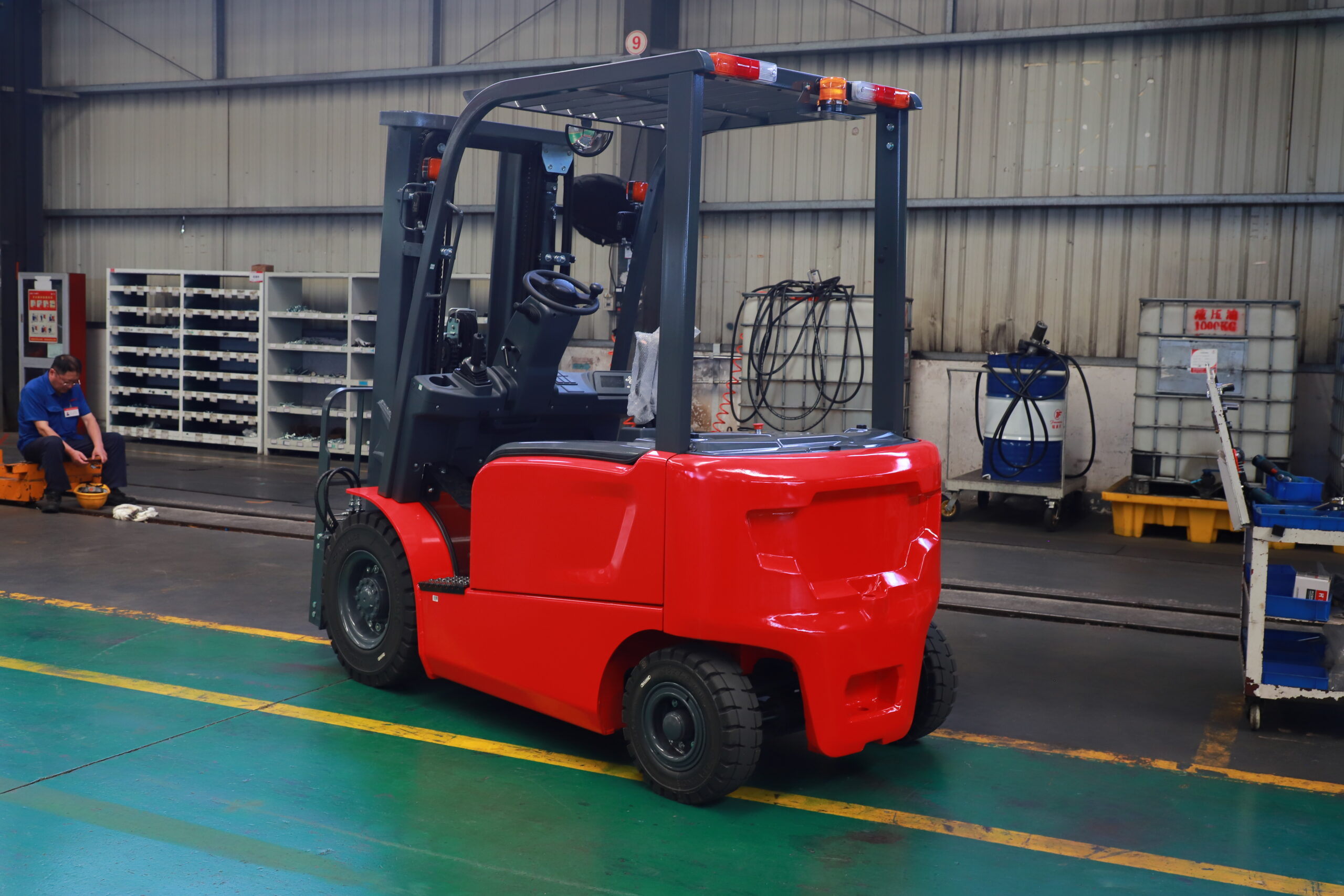
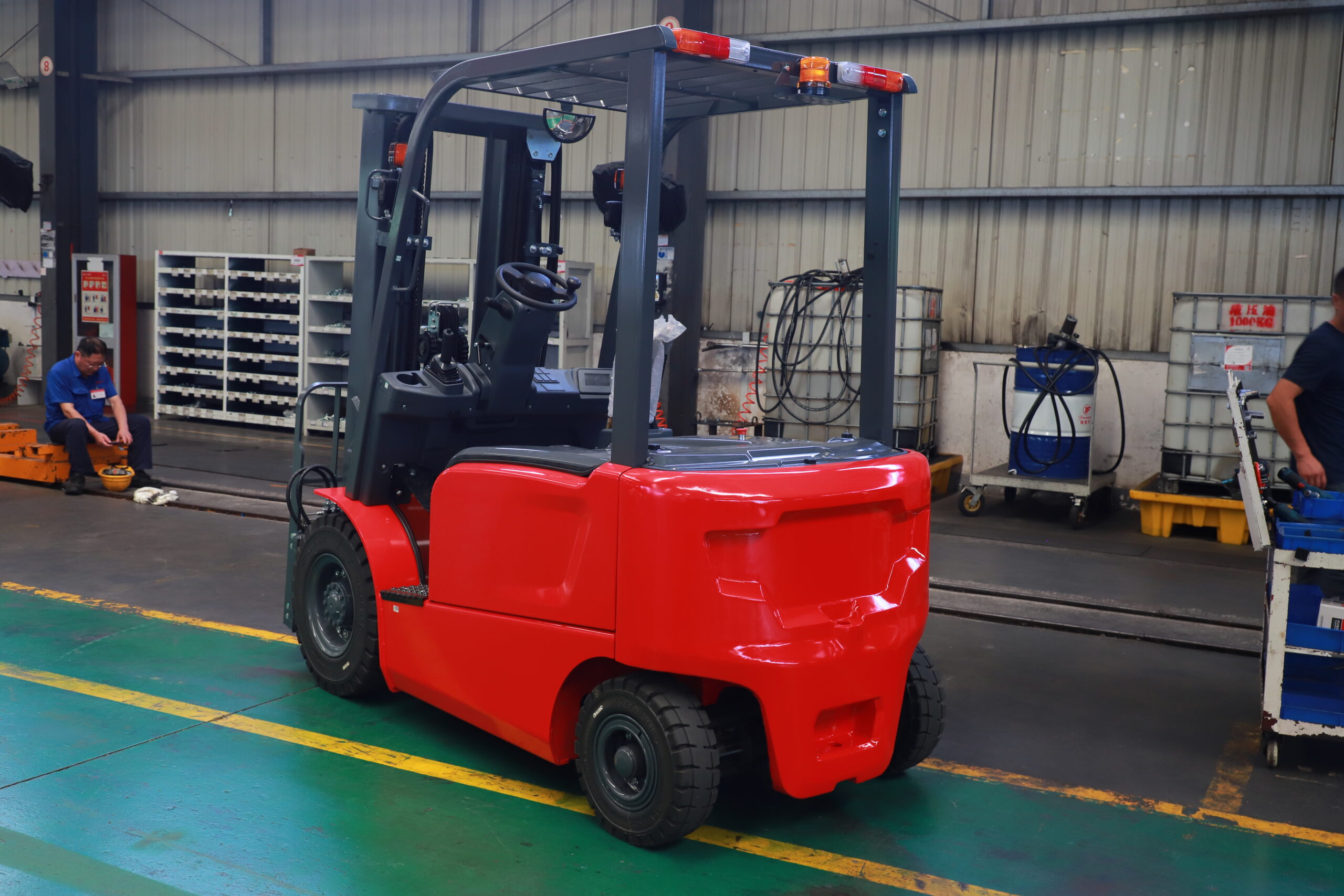
A 2.5 ton electric forklift is designed for warehouses, manufacturing plants, distribution centers, logistics operations, and other material-handling environments that require reliable lifting capacity without the emissions and noise associated with traditional internal-combustion forklifts.
With a four-wheel chassis, lithium battery power, AC induction drive motor, and intelligent electrical systems, this forklift provides a practical balance between lifting performance, operating efficiency, comfort, and maintenance requirements.
Why Do You Need a 2.5 Ton Electric Forklift?
Choosing the right forklift capacity is important for both safety and operating efficiency. A 2.5-ton model is suitable when your normal loads are too heavy for smaller electric forklifts but you do not need the larger dimensions and operating costs of a 3.5-ton or higher-capacity machine.
The four-wheel configuration provides a stable platform for indoor and outdoor material handling. It can be used in warehouses, factories, distribution centers, workshops, and loading areas where maneuverability and load stability are important.
The lithium battery system is another major reason to choose a 2.5 ton electric forklift. Compared with conventional lead-acid battery systems, lithium batteries can provide convenient charging, reduced routine maintenance, and consistent power delivery during normal working conditions.
The forklift can also operate without direct exhaust emissions, making it particularly suitable for indoor environments where air quality is important.
2.5 Ton Electric Forklift Technical Specifications
Benefits of a 2.5 Ton Electric Forklift
1. Zero Direct Exhaust Emissions
A 2.5 ton electric forklift does not produce direct exhaust emissions during operation. This makes it a suitable choice for enclosed warehouses, workshops, factories, and other areas where ventilation and air quality are important.
2. Lithium Battery Power
The lithium battery system provides a modern alternative to conventional lead-acid power. Depending on the selected battery capacity and working conditions, the forklift can be configured for different operating schedules.
Battery options for the 2–2.5 ton range can be selected from approximately 150 Ah to 460 Ah, helping customers balance operating time, charging requirements, and purchase cost.
3. Lower Routine Maintenance
The AC induction motor is designed for maintenance-free operation under normal working conditions. The lithium battery also eliminates many routine battery-maintenance tasks associated with traditional lead-acid batteries.
This can help reduce downtime and simplify daily fleet management.
4. Better Stability
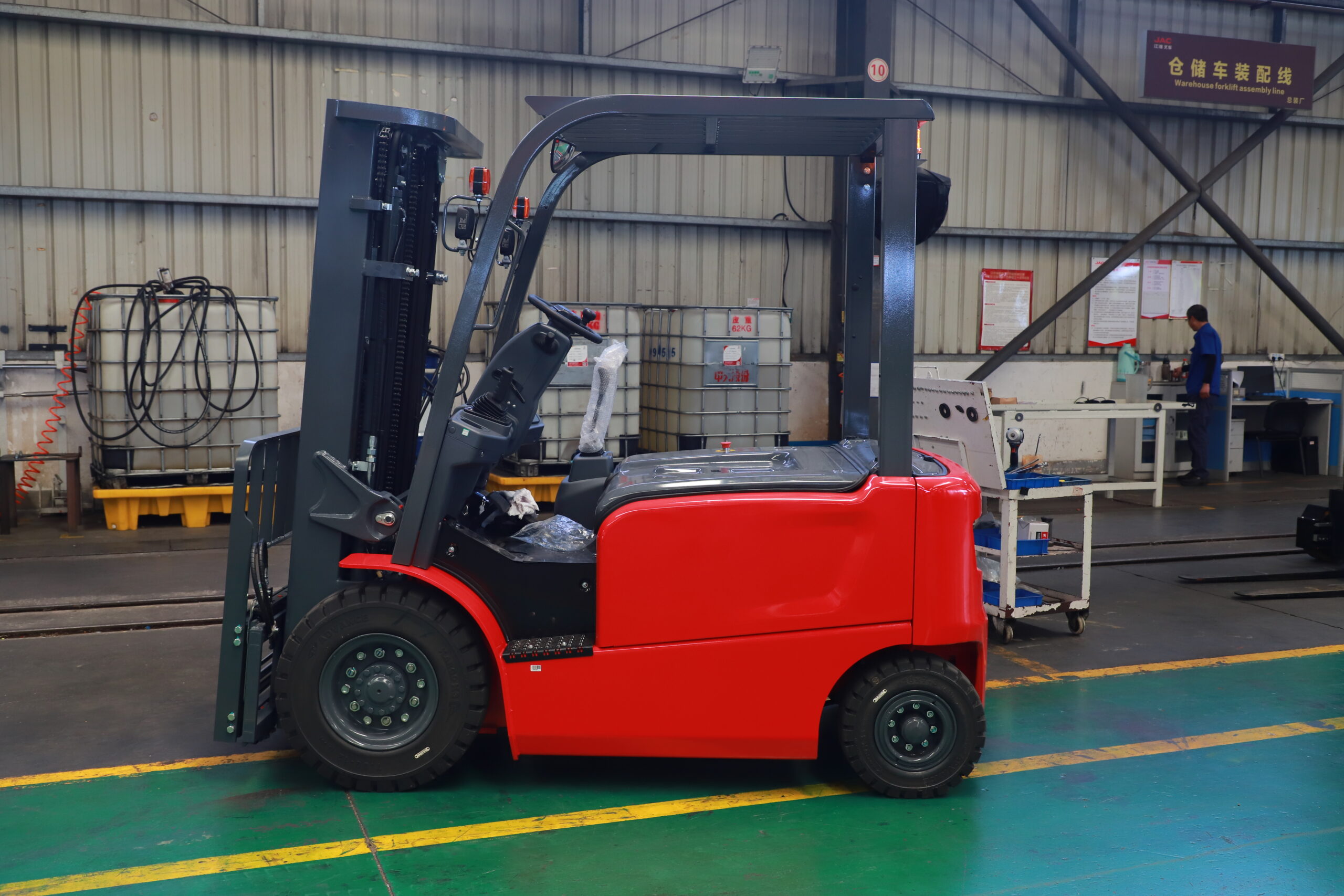
The forklift uses a high-mounted swivel steering axle designed to improve lateral stability. The cast axle body uses tapered roller bearings to support durability and long service life.
The centrally positioned and lowered battery also helps place weight closer to the center of the vehicle, contributing to overall lateral stability.
5. Comfortable Operator Environment
Operator comfort directly affects productivity during long shifts. The forklift incorporates several ergonomic features, including:
- Adjustable steering wheel
- Hydraulic steering system
- Extended entry handle
- Wide-view mast design
- Enlarged non-slip step
- Smart color display
- Optional LED full-light package
- Cup holder and mobile-phone charging interface
The wide-view mast is designed to improve visibility while reducing the obstruction caused by the mast structure.
2.5 Ton Electric Forklift Configuration
A typical 2.5 ton electric forklift configuration includes a lithium battery, AC induction motor, electronic controller, charger, hydraulic lifting system, steering system, mast, forks, protective overhead guard, and operator display.
The electrical system can be configured with controllers from Curtis or Motion, depending on the target market and customer requirements.
The charging system can also be matched to the selected battery capacity. Different battery and charger combinations can be specified according to charging time, daily operating hours, and available electrical infrastructure.
For customers requiring extended operating time, a higher-capacity lithium battery can be selected. For applications with shorter operating cycles and frequent charging opportunities, a smaller battery may provide a more cost-effective solution.
High-Ergonomics Design for Daily Operation
A forklift is not only a lifting machine; it is also an operator workplace.
Le 2.5 ton electric forklift incorporates several features intended to make daily operation easier. The driving speed can be adjusted through multiple gears to accommodate different working conditions.
A smart color display provides important operating information at a glance. The forklift can also automatically enter an energy-saving sleep mode after a period of inactivity, helping reduce unnecessary battery consumption.
Optional LED lighting, an enlarged anti-slip step, an adjustable steering wheel, and hydraulic power steering further improve the operator experience.
Safety-related functions can include overheat protection, overcurrent protection, low-voltage protection, speed limitation, and optional seat-belt warning or other safety configurations.
What Should You Consider When Ordering a 2.5 Ton Electric Forklift?
1. Load Requirements
Confirm the actual maximum load, average load, load dimensions, and load center. A 2.5-ton rating does not mean every 2,500 kg load can be lifted at every lifting height.
2. Battery Capacity
Consider how many hours the forklift needs to operate per shift and how frequently charging is available. Battery capacity should be matched to actual operating conditions.
3. Mast and Lifting Height
Specify the required lifting height, collapsed mast height, and working environment. This is especially important when the forklift operates beneath warehouse doors, racks, or low ceilings.
4. Indoor or Outdoor Operation
For indoor applications, turning radius, floor conditions, emissions, and noise may be more important. Outdoor applications may require additional consideration of tires, ground clearance, weather protection, and operating conditions.
5. Charger and Electrical Requirements
The charger must match the battery configuration and local electrical supply. Confirm voltage, charging current, connector type, and charging requirements before placing an order.
FAQ
Is a 2.5 ton electric forklift suitable for warehouses?
Yes. Its four-wheel design, electric powertrain, low direct emissions, and available lithium battery configurations make it suitable for many warehouse and indoor material-handling applications.
How long can a lithium battery forklift operate?
Operating time depends on battery capacity, load weight, driving distance, lifting frequency, working conditions, and operator habits. For the 2–2.5 ton configuration, battery options can be selected within approximately 150–460 Ah to match different operating requirements.
Is a 2.5 ton electric forklift suitable for outdoor use?
Yes, depending on the ground conditions and configuration. Customers should specify whether the forklift will operate indoors, outdoors, or in mixed environments so the appropriate tires and protection can be selected.
Does the forklift require regular motor maintenance?
The AC induction motor is designed as a maintenance-free drive system under normal operating conditions. Regular inspections of the electrical system, tires, brakes, hydraulics, forks, battery, and safety equipment are still recommended.
Can the battery and charger be customized?
Yes. Battery capacity and charger specifications can be matched according to the required operating time, charging schedule, local electrical conditions, and customer application.
Why choose a four-wheel 2.5 ton electric forklift?
A four-wheel configuration provides a stable operating platform for material handling and is particularly suitable for applications involving heavier loads, frequent lifting, and longer operating cycles.
Conclusion
A 2.5 ton electric forklift with four-wheel construction and lithium battery power is a practical solution for businesses looking to combine lifting capability, electric efficiency, operator comfort, and reduced routine maintenance. With selectable battery capacity, AC induction drive technology, multiple controller options, ergonomic features, and configurable charging systems, the forklift can be adapted to different warehouse, manufacturing, logistics, and industrial applications.
When selecting a model, focus on load capacity, load center, lifting height, battery capacity, operating hours, charging conditions, working environment, and required safety features. Matching these specifications to the actual application will help ensure reliable performance and better long-term operating value.

 FR
FR  EN
EN  EN_AU
EN_AU  EN_NZ
EN_NZ  AR
AR  KO
KO  ES
ES  PT
PT  IT
IT  DE
DE  RU
RU  JA
JA  HU
HU
Avis
Il n’y a pas encore d’avis.