

-4-1200x600.webp)
If you are planning to purchase a forklift, one of the first questions you will probably ask is: how much is a forklift cost?
The short answer is that there is no single forklift price that fits every application. Depending on the type, lifting capacity, power source, configuration, and whether you buy new or used, a forklift can cost anywhere from several thousand dollars to more than $100,000. Current industry pricing guides show that smaller warehouse equipment can start below $10,000, while standard counterbalance forklifts commonly fall into the $20,000–$50,000 range and specialized heavy-duty equipment can cost substantially more.
However, the purchase price is only one part of the calculation.The better question is not simply “How much does a forklift cost?” but “How much will this forklift cost my business over its useful life?”This guide explains the major factors behind forklift cost and provides a practical framework for choosing the right machine without paying for unnecessary specifications.
Forklift Cost: What Should You Expect to Pay?
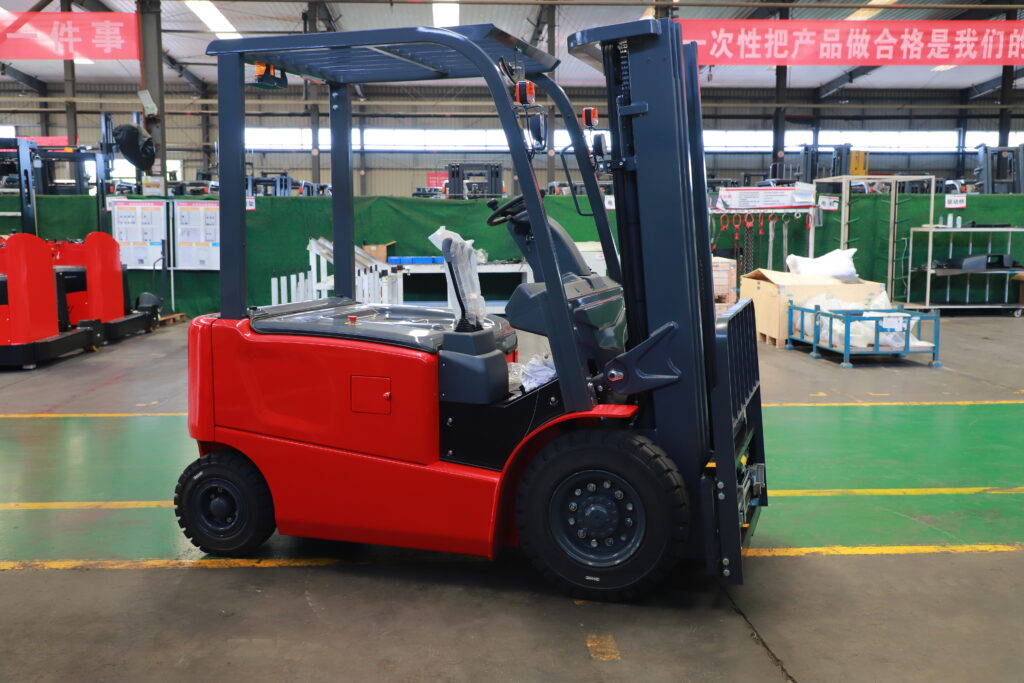
A useful starting point is to separate forklifts into several common categories:
| Forklift Type | Typical New Price Range* |
|---|---|
| Electric pallet truck | $2,000–$6,000 |
| Electric stacker | $3,000–$8,000 |
| Reach truck | $15,000–$35,000 |
| Electric counterbalance forklift | $20,000–$50,000 |
| Diesel/LPG forklift | $25,000–$60,000+ |
| Heavy-duty forklift | $60,000–$100,000+ |
*Actual prices vary by market, brand, capacity, configuration, attachments, battery, shipping, and other options.
For example, a standard warehouse forklift may cost around $20,000–$40,000, while a high-capacity machine designed to handle several tons may require a much larger investment. Recent industry sources also show that used forklifts can sometimes be purchased for significantly less than new equipment, but condition, operating hours, maintenance history, and battery condition become critical factors.
Therefore, using one “average forklift price” can be misleading.
1. Forklift Capacity Has a Major Impact on Price
The first specification to determine is lifting capacity.
A forklift designed to lift 2,000 kg does not require the same frame, hydraulic system, counterweight, mast, or powertrain as a forklift designed to lift 10,000 kg.
Generally:
Light-duty forklifts cost less.
Standard 2–3 ton forklifts occupy a large part of the warehouse market.
5-ton and larger forklifts require stronger components and usually cost more.
Specialized high-capacity forklifts can exceed $100,000.
This is why you should never choose a forklift based only on the average load you move.
Consider your maximum actual load, load center, lifting height, and operating conditions before selecting capacity.
Buying a forklift that is too small can create safety and productivity problems. Buying one that is unnecessarily large means you may spend more on the machine, energy, tires, maintenance, and storage space.
2. Electric vs Diesel: Which Has the Lower Forklift Cost?
Power source is another major factor.
Electric forklifts often have a higher initial purchase price because the battery and charger can represent a significant portion of the equipment investment. Internal-combustion forklifts, such as LPG or diesel models, may have a lower or comparable purchase price depending on the configuration.
But the purchase price does not tell the entire story.
Electric forklifts may offer advantages for indoor operations, including lower routine maintenance requirements and no fuel combustion at the point of operation. Diesel forklifts can be attractive for outdoor, rough-terrain, or heavy-duty applications where long operating periods and high capacities are required.
For a multi-shift warehouse, calculate:Energy cost + maintenance cost + battery/fuel cost + downtime ,rather than comparing only the initial invoice.
3. New vs Used Forklift Cost
Buying used can significantly reduce the upfront forklift cost.
Used forklifts are often attractive to small businesses, startups, warehouses with limited budgets, or operations that do not run equipment continuously. Industry pricing examples show used machines can range from several thousand dollars to tens of thousands, depending heavily on age, hours, condition, and configuration.
But a low purchase price does not automatically mean a low total cost.
Before buying a used forklift, check:
- Total operating hours
- Maintenance and service records
- Engine or motor condition
- Hydraulic system
- Mast and chains
- タイヤ
- Battery condition for electric models
- Fork condition
- Safety equipment
- Availability of replacement parts
A $10,000 used forklift that immediately requires $5,000 in repairs may be less economical than a better-maintained machine costing $14,000.
4. Don’t Forget Attachments and Configuration
The forklift you see in a basic price advertisement may not be the forklift your business actually needs.
Optional equipment can increase the final forklift cost, including:
Side shifters
Fork positioners
Specialized forks
Paper roll clamps
Bale clamps
Rotators
Different mast configurations
Non-marking tires
Special safety systems
Cold-storage configurations
Lift height is also important. A warehouse with high racking may require a taller mast or reach truck, increasing the equipment price.Before requesting quotations, create a detailed specification sheet. Otherwise, you may compare two quotes that appear similar but actually contain very different equipment.
5. Calculate Total Cost of Ownership, Not Just Forklift Cost
One of the biggest purchasing mistakes is focusing entirely on the initial purchase price.Total Cost of Ownership, or TCO, includes the costs associated with owning and operating the forklift throughout its service life. These can include:
TCO = Purchase Price + Energy/Fuel + Maintenance + Repairs + Financing + Tires/Wear Parts + Downtime + Depreciation.For example, Forklift Inventory’s analysis identifies purchase price, operating expenses, maintenance, financing, and depreciation as important components of forklift TCO.
Toyota also highlights planned maintenance, repairs, fuel or charging costs, tires, operator training, downtime, and productivity as factors that should be considered when evaluating forklift ownership costs.
This explains why the cheapest forklift is not necessarily the lowest-cost forklift.Imagine two machines:
Forklift A: $22,000 purchase price
Forklift B: $28,000 purchase price
If Forklift B consumes less energy, requires fewer repairs, has better parts availability, and experiences less downtime, the additional $6,000 upfront investment could potentially be recovered over several years.The right comparison is therefore five-year or seven-year operating cost, not just the purchase quotation.
6. What Is the Best Way to Reduce Forklift Cost?
There are several practical ways to control your investment.
Choose the correct capacity
Do not automatically purchase a larger forklift “just in case.” Oversizing equipment increases capital and operating costs.
Compare complete quotations
Ask suppliers to clearly identify whether the quote includes the battery, charger, attachments, tires, mast, delivery, warranty, and commissioning.
Consider your operating hours
A forklift operating two hours per day has very different economics from one operating 16 hours across multiple shifts.
Evaluate local service support
A slightly cheaper forklift may become expensive if spare parts take weeks to arrive or qualified technicians are unavailable.
Look at residual value
A forklift with good reliability, service support, and market demand may retain more value when you eventually replace it.
7. How to Compare Forklift Quotes Properly
When you receive quotations from different suppliers, don’t compare only the final numbers.
Create a simple comparison sheet:
| Item | Supplier A | Supplier B | Supplier C |
|---|---|---|---|
| Forklift capacity | |||
| Lift height | |||
| Power source | |||
| Battery/charger | |||
| Attachments | |||
| 保証 | |||
| Delivery | |||
| Maintenance support | |||
| Spare parts | |||
| Purchase price | |||
| Estimated operating cost |
This approach makes hidden differences much easier to identify.A supplier offering a lower headline forklift cost may not actually offer the lowest total investment if important equipment or services are excluded.
8. A Simple Forklift Buying Formula
Before placing an order, answer these seven questions:
1. What is the maximum load?
Don’t estimate. Use your actual heaviest regular load.
2. How high must the load be lifted?
Measure the highest required rack or storage position.
3. Where will the forklift operate?
Indoor, outdoor, cold storage, construction site, factory, or mixed environments?
4. How many hours per day will it operate?
Operating hours strongly influence TCO.
5. Which power source fits the application?
Electric, LPG, diesel, or another solution?
6. Do you need attachments?
Specify them before comparing prices.
7. What is the five-year cost?
Include purchase, energy, maintenance, repairs, and downtime.
Once these questions are answered, it becomes much easier to identify a suitable forklift rather than simply searching for the cheapest forklift cost.
よくあるご質問
How much does a forklift cost?
Forklift cost varies widely. Small warehouse equipment may cost under $10,000, while standard new counterbalance forklifts can commonly cost around $20,000–$50,000. Heavy-duty and specialized forklifts can exceed $100,000.
How much does a used forklift cost?
Used forklift prices can start at several thousand dollars and increase according to age, operating hours, capacity, condition, battery health, attachments, and brand.
Is an electric forklift cheaper than a diesel forklift?
Not necessarily at purchase. Electric forklifts can have higher initial costs because of the battery and charger. However, depending on operating conditions, electricity, maintenance, and usage patterns, the long-term cost may be lower.
What affects forklift cost the most?
The major factors include lifting capacity, power source, lift height, battery configuration, attachments, operating environment, brand, new or used condition, and local service requirements.
Should I buy or lease a forklift?
The answer depends on cash flow, expected usage period, operating hours, maintenance responsibilities, and ownership objectives. Compare the total cost over the period you expect to use the equipment rather than comparing only monthly payments.
Final Thoughts: Focus on Value, Not Just Price
So, how much is a forklift cost?
The realistic answer is: it depends on what you need the forklift to do.
A small warehouse machine may cost only a few thousand dollars, while a standard industrial forklift may require an investment of tens of thousands of dollars, and specialized heavy-duty equipment can cost substantially more.
The smartest purchasing decision starts by defining the application, capacity, lift height, operating hours, power source, and required attachments. Then calculate the Total Cost of Ownership instead of choosing equipment solely by the lowest purchase price.
 JA
JA  EN
EN  EN_AU
EN_AU  EN_NZ
EN_NZ  AR
AR  FR
FR  KO
KO  ES
ES  PT
PT  IT
IT  DE
DE  RU
RU  HU
HU