

Descrição
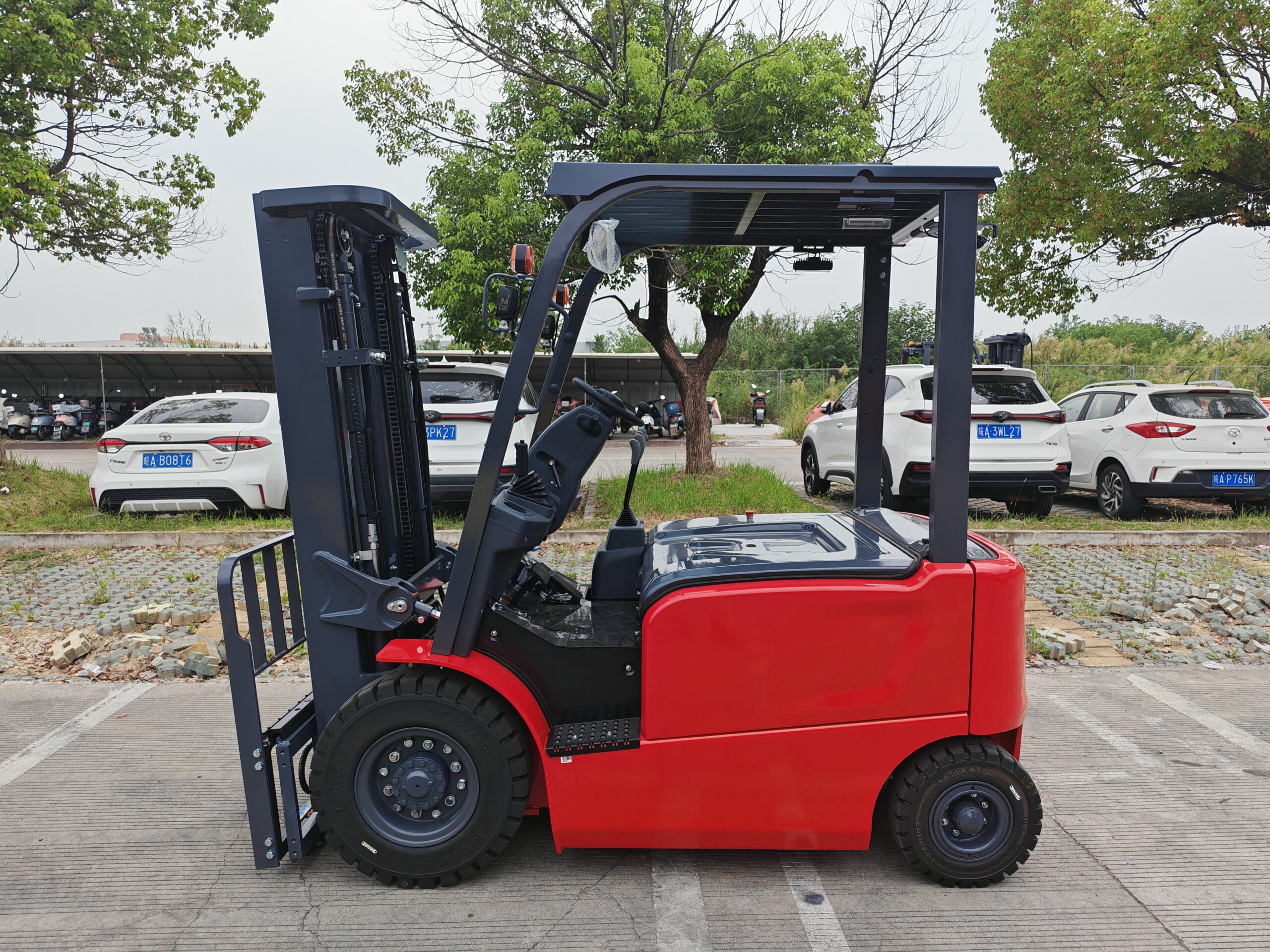
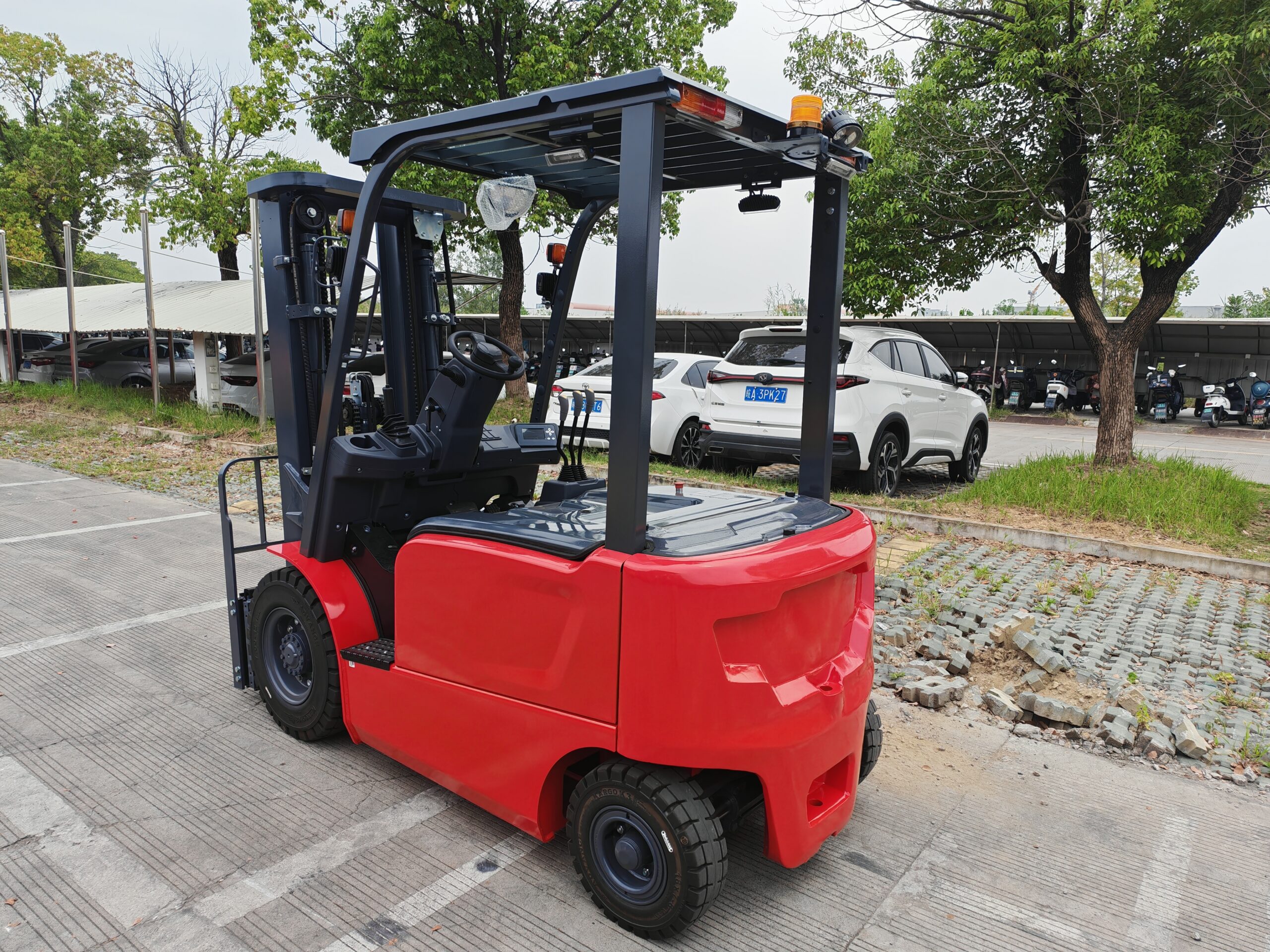
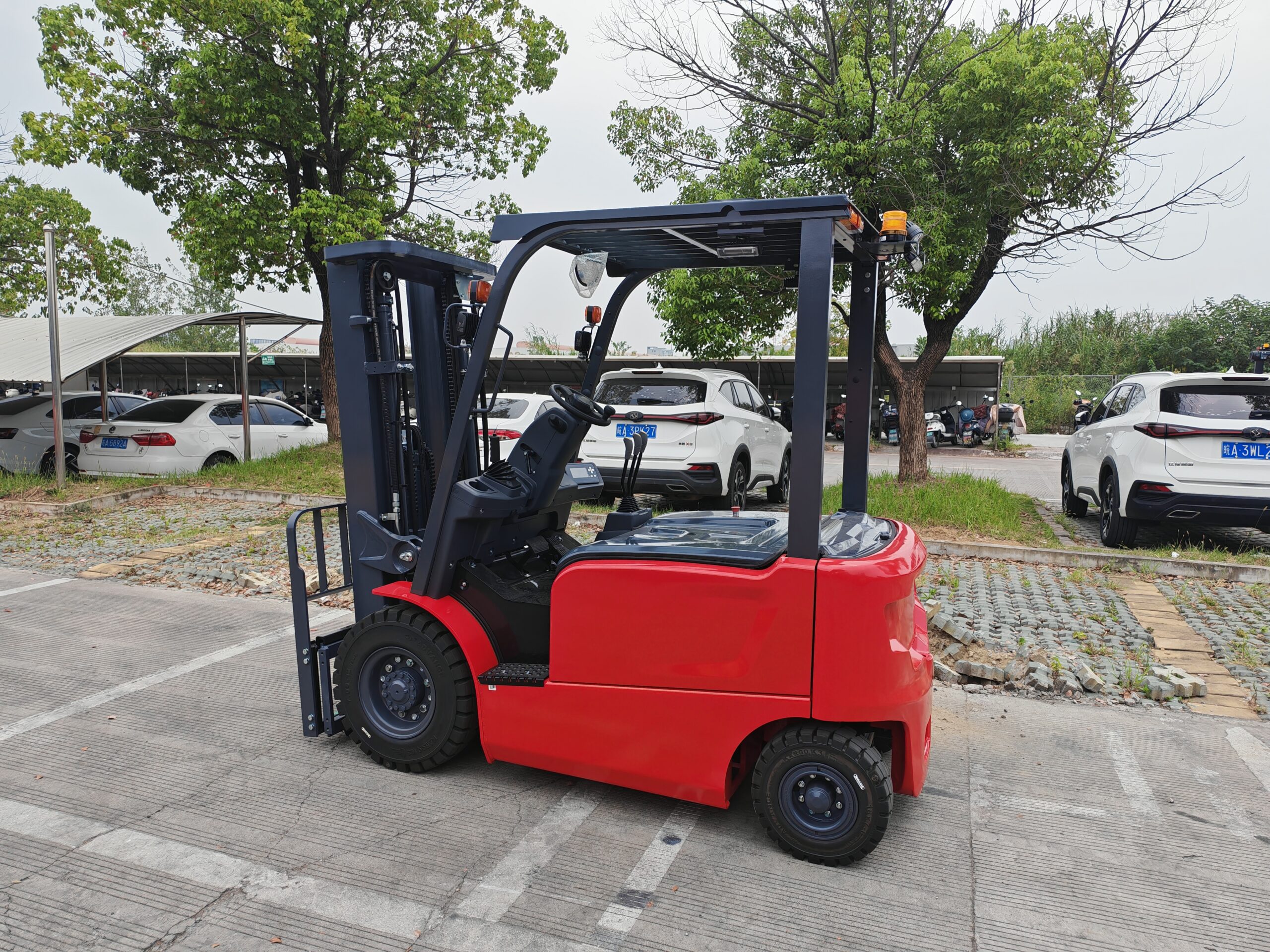
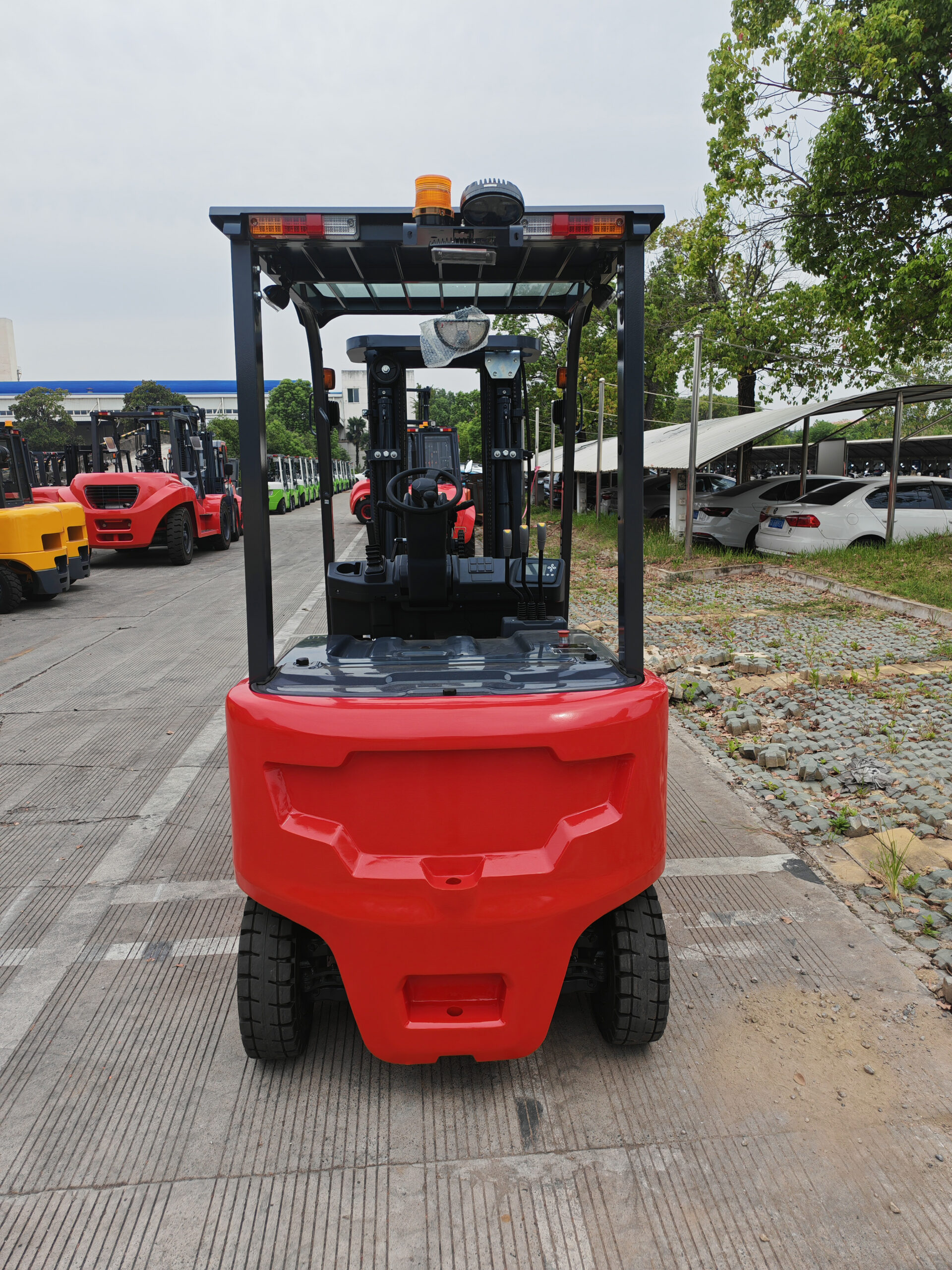
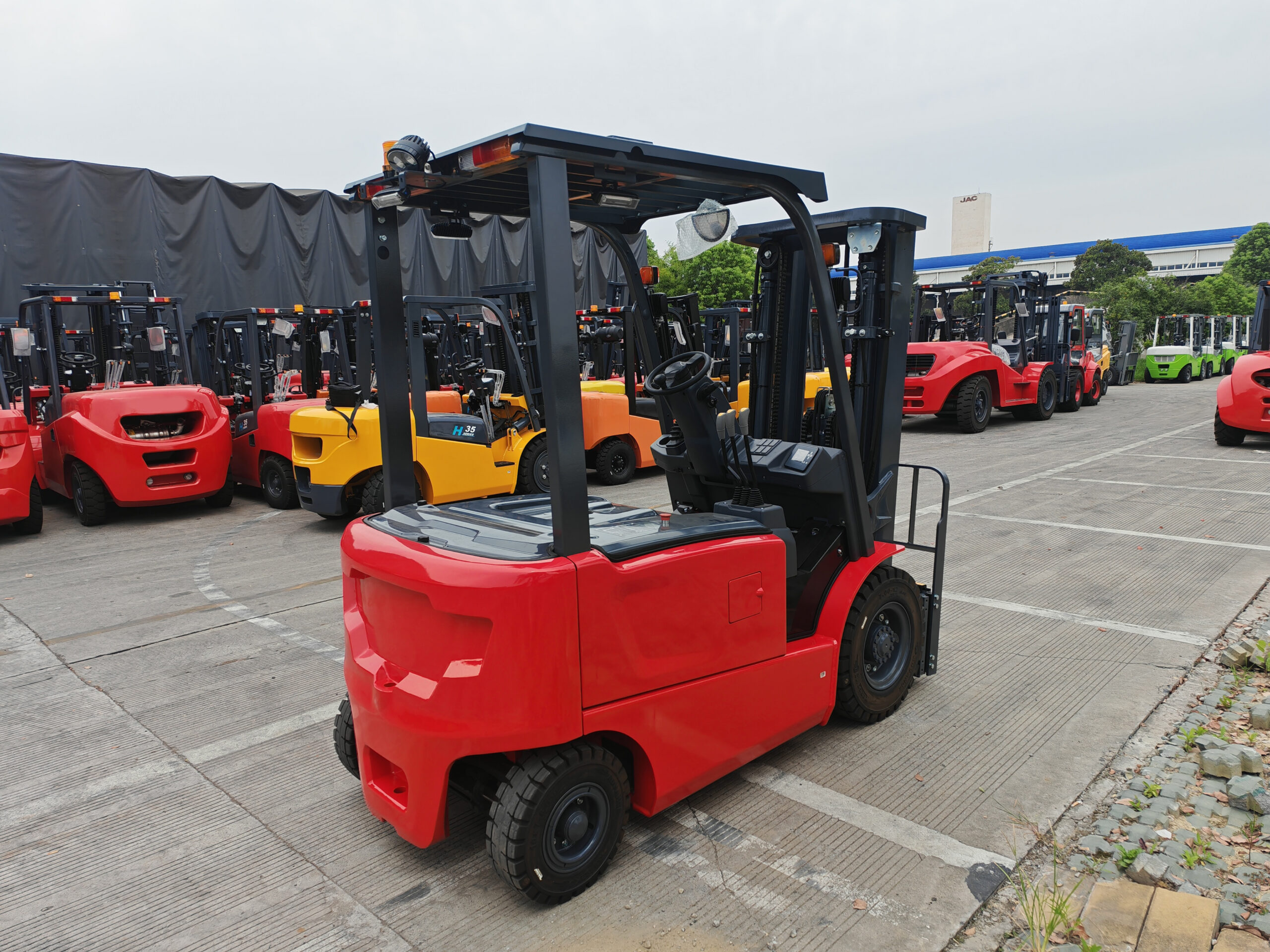
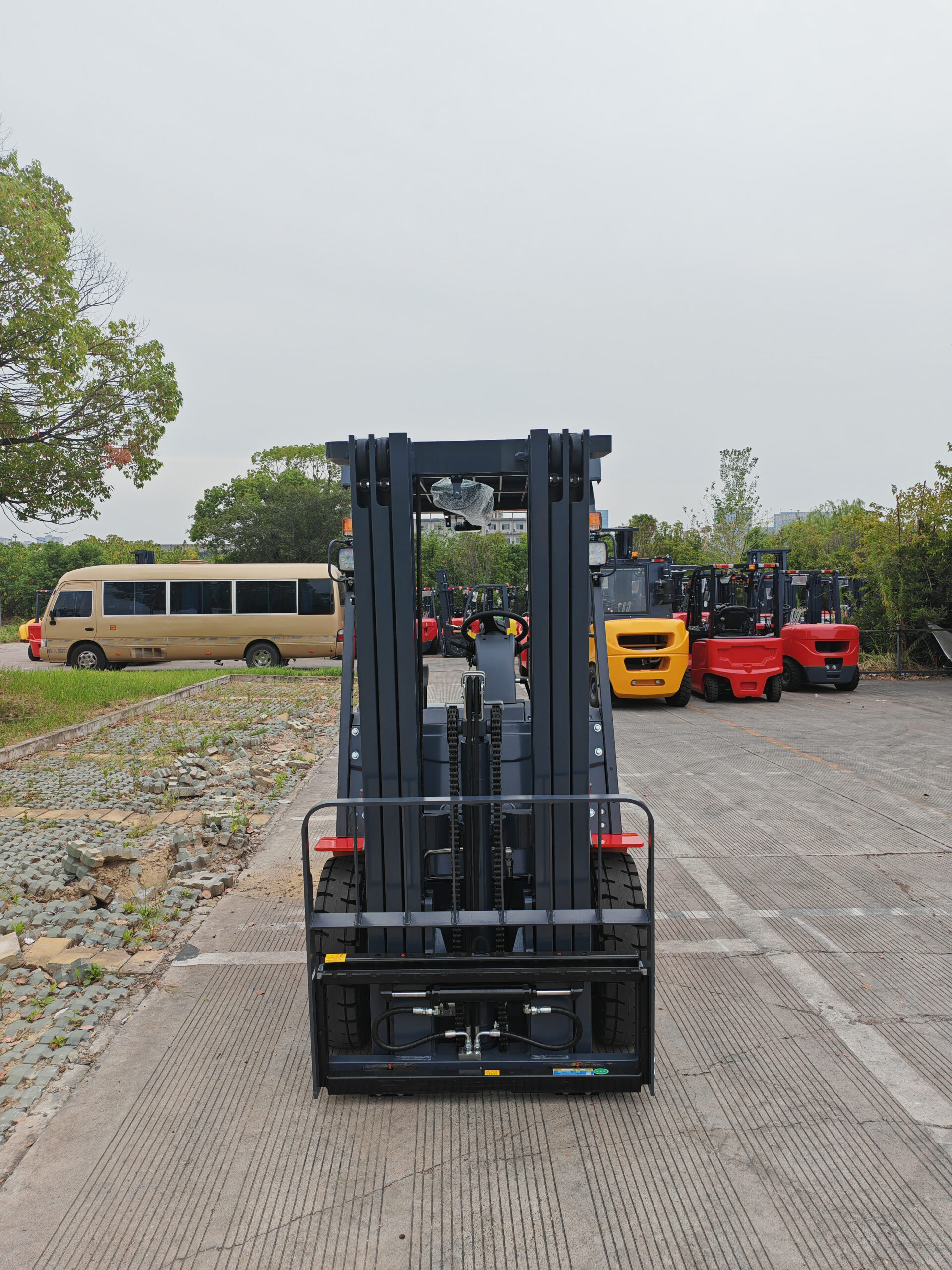
An Electric Sit Down Forklift is a battery-powered forklift operated by a seated driver. Compared with pedestrian-operated material handling equipment, it is better suited for continuous transportation and extended operating periods. Compared with traditional internal combustion forklifts, electric drive technology is particularly suitable for many indoor warehouses and manufacturing environments.
However, choosing the right forklift is not simply a matter of comparing prices or rated capacities. Load weight, lifting height, aisle width, battery type, operating hours, and working conditions all affect the final forklift configuration.
So, why choose an Electric Sit Down Forklift? What configurations and benefits does it offer? How does it compare with an Electric Standing Forklift? Is an Electric Sit Down Forklift safe? And how should you choose the right lifting capacity?
1. Why Choose an Electric Sit Down Forklift?
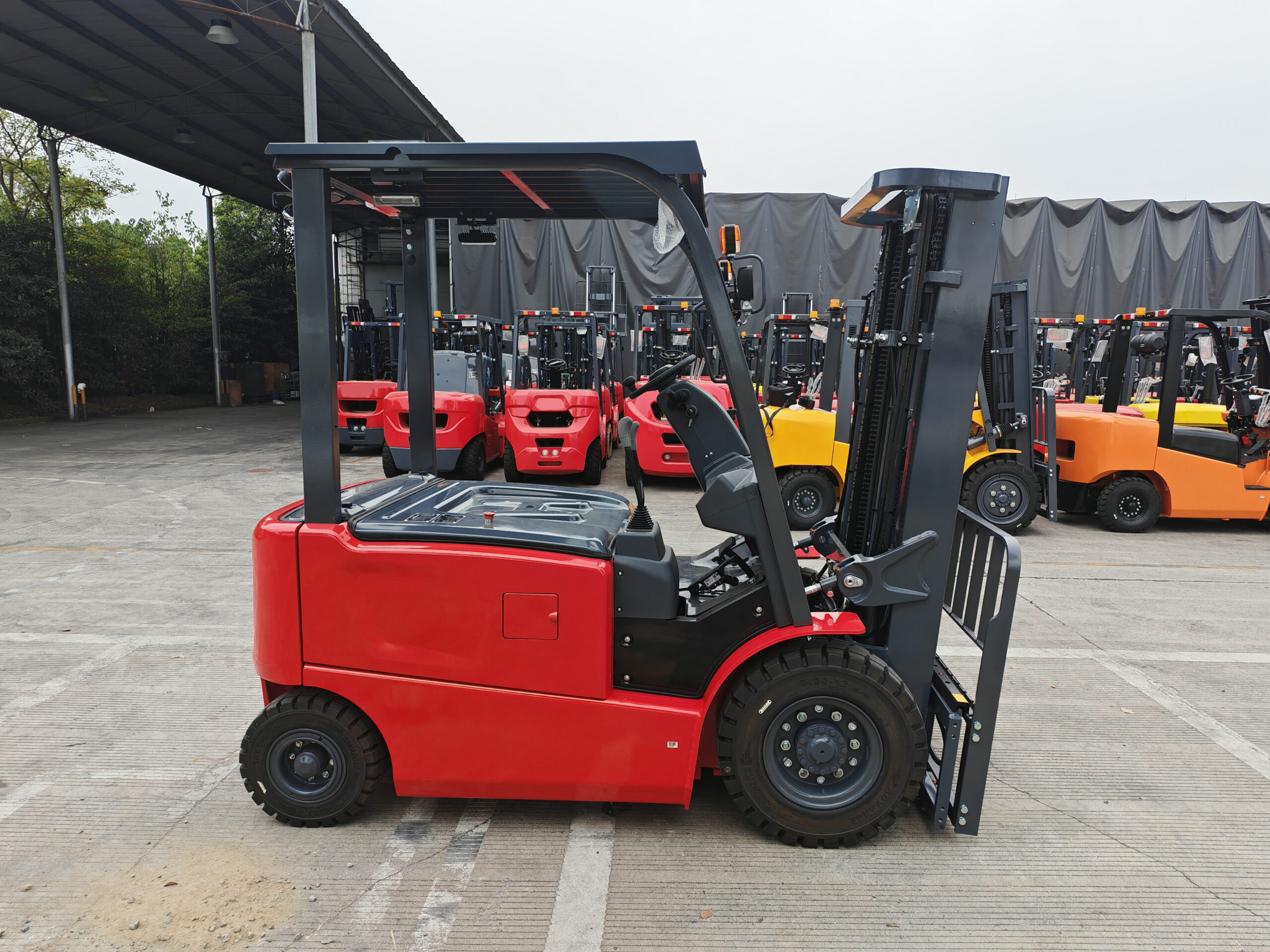
The first consideration when choosing an Electric Sit Down Forklift should be the actual operating requirements.
If a business needs to move pallets frequently throughout the day and operators need to drive continuously for extended periods, the seated operating design provides a stable and comfortable driving position. Operators can remain seated while controlling forward and reverse movement, steering, braking, and fork lifting without having to continuously walk behind or alongside the equipment.
The electric power system is another important advantage.Unlike internal combustion forklifts that rely on diesel or gasoline engines, Electric Sit Down Forklifts are powered primarily by batteries and electric drive systems. For warehouses, factories, logistics centers, and other indoor environments, electric forklifts generally offer low-noise operation and zero tailpipe emissions, making them suitable for workplaces where indoor air quality and noise levels are important considerations.
Electric Sit Down Forklifts can also be configured with different masts, forks, batteries, and safety features according to specific application requirements. Rather than being a one-size-fits-all machine, an electric seated forklift can be selected and configured according to the actual working conditions.
An Electric Sit Down Forklift is particularly worth considering when:
Pallet handling is required frequently throughout the day.
Operators need to drive the forklift for extended periods.
The main working environment is indoors.
Goods need to be stacked or retrieved from storage racks.
Low noise and zero tailpipe emissions are important.
The company needs a balance between handling efficiency and operator comfort.
2. Main Configurations of an Electric Sit Down Forklift
| Category | Items | Standard & Options |
| Basic items | Pneumatic tyre* | ● |
| Solid tyre | ○ | |
| Single tyre (front wheel) | ● | |
| Double front tyres (front wheels) | ○ | |
| 2th valve | ● | |
| 3th & 4th valve | ○ | |
| 3m duplex mast | ● | |
| Other types and different height masts | ○ | |
| Standard forks | ● | |
| Non-standard forks and attachments | ○ | |
| Standard colors | ● | |
| other colors(customized) | ○ | |
| Security items | Turning speed limit | ○ |
| Reversing handrail with horn switch | ○ | |
| Alarm for speeding at 5km/h | ○ | |
| Alarm for speeding at 8km/h | ○ | |
| Alarm for speeding at 10km/h | ○ | |
| Emergency power-off switch | ● | |
| OPS functions | ● | |
| Seat belt start switch (Seat belt fastening required to start.) | ○ | |
| Multi-way valve overload protection | ● | |
| Dry powder fire extinguisher (2kg) | ○ | |
| Back-up buzzer | ● | |
| Reversing Chinese voice speaker | ○ | |
| Non-universal key | ● | |
| Universal key | ○ | |
| Electronic lifting buffer | ○ | |
| Central wide-angle rearview mirror | ● | |
| Side mirrors + central wide-angle rearview mirror | ○ | |
| Comfort items | Half-enclosed seat | ● |
| Suspension seat | ○ | |
| USB port(5V/1A) | ● | |
| Rotable steering wheel in place | ○ | |
| Synchronous steering | ○ | |
| Steering wheel with handle ball | ● | |
| Fan | ○ | |
| Cab and air conditioner | Cab (including fan + wiper) | ○ |
| heater | ○ | |
| Cooling air conditioner | ○ | |
| heater + Cooling air conditioner | ○ | |
| Front windshield (with wiper) | ○ | |
| Rear windshield | ○ | |
| Rainproof roof | ○ | |
| Overhead guard | Overhead guards of different heights | ○ |
| Overhead guards with protective cover | ○ | |
| Lighting items | Rear LED light | ○ |
| Forward LED red/blue light | ○ | |
| Rear LED red/blue light | ○ | |
| Red/blue light on the left, right and back three sides | ○ | |
| LED flashing warning light | ● | |
| LED rotating warning light | ○ | |
| LED rotating buzzer warning light | ○ | |
| others | REMA320 charging port | ● |
| National standard charging gun | ○ | |
| board charger | ○ | |
| ●Standard; ○Optional; Some non-standard options need to be customized. Please consult the local salesperson before purchasing. | ||
| *Standard solid tyres for 3-3.5ton’s rear wheel |
3. What Are the Benefits of an Electric Sit Down Forklift?
3.1 Better for Long Operating Hours
One of the main characteristics of a sit-down forklift is that the operator can remain seated while driving.When a forklift needs to operate continuously for several hours per day, a seated configuration can reduce the physical demands associated with constant walking and is well suited to high-frequency material handling operations.
3.2 Suitable for Indoor Material Handling
Electric Sit Down Forklifts are powered by batteries and do not produce tailpipe emissions during operation. This makes them suitable for many indoor warehouses, factories, and production facilities.
For industries such as food processing, electronics, pharmaceuticals, and other applications with specific indoor environmental requirements, an electric forklift can be considered according to the applicable industry standards and working conditions.
3.3 Low-Noise Operation
Electric drive systems generally produce less operating noise than traditional internal combustion systems.In warehouses and manufacturing facilities where employees and forklifts work in close proximity, lower operating noise can help create a more comfortable working environment.
3.4 Flexible Handling Performance
Electric Sit Down Forklifts are generally designed for good maneuverability and can be used for material handling in warehouse aisles, production areas, loading zones, and other workspaces.For facilities with limited space, buyers should pay particular attention to overall vehicle width, turning radius, and the required aisle width.
3.5 Adaptable to Different Material Handling Requirements
Masts, forks, batteries, and other attachments can be selected according to the type of goods and working environment.This flexibility allows Electric Sit Down Forklifts to be used in a wide range of industries, including warehousing, manufacturing, logistics, distribution, and industrial material handling.
4. Electric Sit Down Forklift vs. Electric Standing Forklift
Both Electric Sit Down Forklifts and Electric Standing Forklifts are powered by electricity, but their designs and typical applications are different.
| Comparison | Electric Sit Down Forklift | Electric Standing Forklift |
|---|---|---|
| Operating position | Seated | Standing |
| Extended driving | More suitable | Suitable for frequent short-distance operation |
| Operator comfort | Designed for extended driving | Focuses on quick entry and exit |
| Typical loads | Pallets and heavier loads | Many indoor handling applications |
| Typical applications | Warehouses, factories, logistics centers | Warehouses, distribution centers, compact work areas |
| Operating space | Requires a dedicated seated driving position | Can offer a more compact operator area |
| Typical work pattern | Continuous handling and longer operating periods | Frequent short-distance handling and quick access |
If a company’s primary tasks involve long-duration pallet handling, truck loading and unloading, and rack stacking, a sit-down forklift can be well suited to this type of workflow.
If operators need to get on and off the machine frequently, or if the facility has particularly tight operating areas, a standing forklift may also be considered based on its dimensions and operating characteristics.
Therefore, there is no universal answer as to which type is better. The right choice depends on the company’s workflow, warehouse layout, load requirements, and operating conditions.
5. Is an Electric Sit Down Forklift Safe?
Electric Sit Down Forklifts are widely used in industrial material handling applications. However, forklift safety depends not only on the machine itself, but also on operator training, load conditions, workplace layout, and proper operating procedures.Various features can be used to improve operational safety.
Seat Safety Switch
Some models are equipped with a seat safety switch. When the operator leaves the seat, certain travel or operating functions may be restricted according to the vehicle’s control system.
Parking Brake
Using the parking brake when the forklift is parked can help reduce the risk of unintended vehicle movement.
Overhead Guard
An overhead guard provides a level of protection for the operator and is particularly useful when handling and stacking loads in warehouse environments.
Warning Lights and Horn
In areas where pedestrians and forklifts work together, warning lights and audible signals can help alert nearby personnel to the forklift’s movement.
Operator Visibility
The operator should have sufficient visibility of the travel path, load, and forks. An appropriate operator position and mast design can help improve visibility during handling operations.However, safety features cannot replace proper operating procedures.
Forklift operators should receive appropriate training and follow the manufacturer’s operating instructions. During daily operations, operators should avoid overloading, uneven loading, excessive speed when turning, and transporting unstable loads.
6. How to Choose the Right Capacity for an Electric Sit Down Forklift?
Choosing the correct capacity is one of the most important decisions when purchasing an Electric Sit Down Forklift.Electric Sit Down Forklifts are available in different rated capacities, such as 1.5 tons, 2 tons, 2.5 tons, 3 tons, and higher capacities depending on the model.The correct capacity should be determined according to the actual working conditions rather than simply choosing the largest available model.
6.1 Maximum Load Weight
First, determine the heaviest load that the forklift will need to handle.For example, if most loads weigh around 1.5 tons but occasional loads reach 2 tons, selecting a 1.5-ton forklift may not provide sufficient capacity for the full range of operations.
6.2 Load Center
Load weight is not the only consideration.The farther the load center is from the front face of the forks, the greater the effect on the forklift’s actual lifting capacity and stability.Therefore, buyers should consider load dimensions, load center, and the forklift’s rated load center together.
6.3 Lifting Height
The required lifting height is another critical factor.Higher lifting heights can affect the forklift’s stability and rated capacity. If loads need to be placed on high storage racks, buyers should not select a forklift based only on its rated capacity at ground level.The rated capacity at the required lifting height should be checked carefully.
6.4 Load Dimensions
Two loads with the same weight can have different effects on a forklift if their dimensions and centers of gravity are different.For example, a compact load with a concentrated center of gravity is different from a large load with the same weight but a longer load center.
6.5 Warehouse Aisle Width
Higher-capacity forklifts may have larger overall dimensions.When selecting a 2-ton, 3-ton, or higher-capacity forklift, companies should also confirm the warehouse aisle width, rack spacing, and turning area.
6.6 Operating Frequency
If the forklift will operate intensively for long periods every day, buyers should also consider battery capacity, motor performance, thermal management, and overall equipment durability.
In other words, the right forklift capacity is not necessarily the largest capacity available. It is the capacity that can safely handle the actual maximum load while remaining compatible with the available operating space and working conditions.
7. How to Choose the Right Electric Sit Down Forklift for Your Business?
Before purchasing an Electric Sit Down Forklift, companies can evaluate their requirements in the following order.
Step 1: Determine the maximum load weight.
Identify the heaviest load that the forklift will actually handle rather than relying only on the average load weight.
Step 2: Confirm load dimensions and load center.
Measure the length, width, height, and center of gravity of the typical and maximum loads.
Step 3: Determine the maximum lifting height.
Check the required rack height and confirm the forklift’s rated capacity at that lifting height.
Step 4: Measure the warehouse aisles.
Make sure the forklift can travel, turn, and position loads within the available space.
Step 5: Determine daily operating hours.
Select an appropriate battery capacity and charging solution based on the expected daily workload.
Step 6: Evaluate the working environment.
Determine whether the forklift will be used indoors or outdoors and whether it will operate in cold storage, humid, dusty, or other specialized environments.By evaluating these factors together, businesses can select an Electric Sit Down Forklift that better matches their actual operating requirements.
8. What Industries Use Electric Sit Down Forklifts?
Electric Sit Down Forklifts are versatile material handling machines that can be used in a wide range of industries.
Warehousing and Logistics:
Used for pallet receiving, storage, retrieval, stacking, and internal transportation.
Manufacturing:
Used for raw material transportation, production-line supply, work-in-process handling, and finished goods storage.
Retail Distribution Centers:
Used for high-volume pallet handling, loading, unloading, and warehouse operations.
Food and Beverage:
Suitable for certain indoor warehouse and production environments where low-noise, zero-tailpipe-emission equipment is preferred.
Electronics Manufacturing:
Can be used for indoor material transfer, component handling, and finished product transportation.
Specific applications should always be evaluated according to industry regulations, environmental conditions, load characteristics, and equipment requirements.
9. What Should You Consider When Purchasing an Electric Sit Down Forklift?
Price is an important consideration when purchasing a forklift, but it should not be the only factor.Companies should also evaluate the forklift’s rated capacity, lifting height, battery type, charging method, overall dimensions, turning radius, fork specifications, safety features, maintenance requirements, and after-sales support.
For industrial equipment intended for long-term use, overall reliability, spare parts availability, service support, and ease of maintenance are also important.For bulk purchases, it can be helpful to provide the supplier with actual warehouse and load information and request a recommended forklift configuration instead of selecting a model solely from a product catalog.
10.Performance Parameters
FAQ
What is an Electric Sit Down Forklift mainly used for?
An Electric Sit Down Forklift is mainly used for pallet handling, loading and unloading, rack stacking, warehouse transportation, and factory material handling. Its seated operating design is particularly suitable for applications that require extended driving and continuous material movement.
Can an Electric Sit Down Forklift be used indoors?
Yes. Its electric power system makes it suitable for many indoor warehouses, factories, and production facilities. The specific model should be selected according to floor conditions, aisle space, load requirements, and industry regulations.
What capacity options are available for Electric Sit Down Forklifts?
Electric Sit Down Forklifts are available in different rated capacities depending on the model. Common capacity ranges include 1.5 tons, 2 tons, 2.5 tons, 3 tons, and higher capacities. The appropriate capacity should be selected based on maximum load weight, load center, lifting height, and operating conditions.
What is the difference between an Electric Sit Down Forklift and an Electric Standing Forklift?
The main difference is the operator position. An Electric Sit Down Forklift is designed for seated operation and is generally well suited to extended driving and continuous material handling. An Electric Standing Forklift uses a standing operator position and can be suitable for applications involving frequent entry and exit and short-distance material movement.
Are Electric Sit Down Forklifts safe?
Electric Sit Down Forklifts can be used safely when the equipment is properly configured, operated, and maintained. Operators should follow the manufacturer’s rated capacity, load-center requirements, and operating procedures and should avoid overloading, uneven loading, and unsafe driving practices.
Conclusão
An Electric Sit Down Forklift is more than simply an electric version of a conventional material handling machine. It combines electric drive technology, seated operation, and lifting capability to support pallet handling, stacking, loading and unloading, and internal material transportation in warehouses, factories, logistics centers, and other industrial environments.
When selecting an Electric Sit Down Forklift, companies should pay particular attention to rated capacity, load center, lifting height, mast type, battery system, vehicle dimensions, aisle width, and safety features. Matching the forklift configuration to the actual working environment is essential for achieving efficient and reliable material handling.
If you are choosing an Electric Sit Down Forklift, start by answering five key questions:What type of load will be handled? How heavy is the load? How high does it need to be lifted? How wide are the operating aisles? How many hours will the forklift operate each day?
Once these core requirements are clear, it becomes much easier to select the appropriate forklift capacity, configuration, and battery solution. This approach can help avoid choosing equipment that is either oversized or under-capacity while creating a more efficient and practical material handling solution.
-2-300x300.webp)


 PT
PT  EN
EN  EN_AU
EN_AU  EN_NZ
EN_NZ  AR
AR  FR
FR  KO
KO  ES
ES  IT
IT  DE
DE  RU
RU  JA
JA  HU
HU
Avaliações
Ainda não existem avaliações.