

-2.webp)
.webp)
-6.webp)
-5.webp)
-4.webp)
Beschreibung
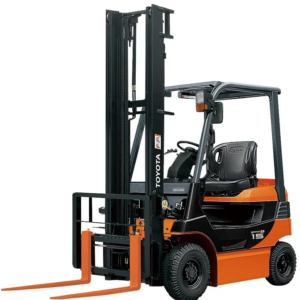
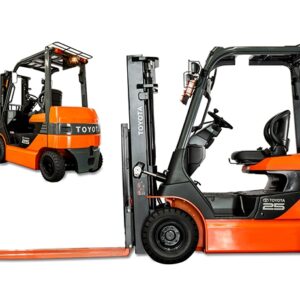
An industrial electric forklift is a battery-powered material handling vehicle designed for industrial production, warehouse logistics, material transportation, loading and unloading, and other demanding handling applications. Compared with traditional fuel-powered forklifts, an industrial electric forklift uses a battery as its primary power source and works through an integrated system consisting of the battery, motor, controller, and charger. This makes it an efficient, reliable, and low-noise solution for modern industrial material handling.
With the development of automated manufacturing, green factories, and intelligent logistics, businesses are placing greater demands on forklift efficiency, reliability, energy costs, and environmental performance. An industrial electric forklift can handle pallet transportation, cargo loading and unloading, material transfer, stacking, and other common industrial tasks. It can also be configured with different battery capacities, motors, controllers, and chargers according to specific customer requirements.
For different load capacities and working intensities, an industrial electric forklift can be equipped with batteries in various capacities. Depending on the actual application, battery options can range from approximately 125Ah to 608Ah, providing suitable power solutions for light-duty, medium-duty, and heavy-duty industrial handling operations.
Industrial Electric Forklift is used in Industry.
An industrial electric forklift is widely used in manufacturing plants, industrial warehouses, production workshops, logistics centers, machinery factories, automotive parts plants, electronics manufacturers, and other industrial environments where frequent material handling is required.
In factory production lines, an industrial electric forklift can transport raw materials, semi-finished products, and finished goods over short distances. For example, it can move palletized raw materials from the warehouse to the production area and then transport finished products from the production line to the finished-goods warehouse.
In industrial warehouses, an industrial electric forklift can perform pallet handling, rack stacking, loading and unloading, and internal transportation. For indoor warehouses with limited space, the maneuverability of an electric forklift can help businesses improve warehouse space utilization and handling efficiency.
In manufacturing logistics, an industrial electric forklift can also deliver materials to designated production areas according to production schedules. By planning transportation routes efficiently, companies can reduce manual handling and improve the efficiency of production-line material supply.
In addition, an industrial electric forklift is suitable for industries such as automotive manufacturing, machinery manufacturing, electronics, food processing, packaging, home appliances, hardware, and industrial components.
Especially in indoor production workshops, an industrial electric forklift does not produce fuel-engine exhaust during normal operation. This makes it more suitable for industrial environments where indoor air quality is important. At the same time, its relatively low operating noise can contribute to a more comfortable working environment.
For industrial companies operating multiple shifts, different battery capacities can also be selected according to daily operating hours and workload, together with suitable chargers to create a power supply solution that matches the company’s production schedule.
Performance Parameters
| Type | Item | unit | Modell | |||
| Modell | CPD15 | CPD18 | CPD15 | CPD18 | ||
| Mode | POWERFUL | FUNCTIONAL | ||||
| Features | Rated load | kg | 1500 | 1500 | 1500 | 1800 |
| Load center distance | mm | 500 | 500 | 500 | 500 | |
| Power mode | Lithium | Lithium | Lithium | Lithium | ||
| Driving mode | Seat | Seat | Seat | Seat | ||
| Front overhang | mm | 407 | 407 | |||
| Wheelbase | mm | 1475 | 1475 | 1475 | 1475 | |
| Gewicht | Service weight (including battery/excluding battery) | kg | 2840/2610 | 2955/2780 | 2850/2675 | 2965/2790 |
| Axle load (full load, front/rear) | kg | 3865/475 | 4185/570 | 3870/480 | 4190/575 | |
| Axle load (no load, front/rear) | kg | 1280/1560 | 1280/1675 | 1285/1565 | 1285/1680 | |
| Type | Tire type | Pneumatic tire | Pneumatic tire | Pneumatic tire | Pneumatic tire | |
| Front tire size | 6.50-10PR | 6.50-10PR | 6.50-10PR | 6.50-10PR | ||
| Rear tire size | 16*6-8PR | 16*6-8PR | 16*6-8PR | 16*6-8PR | ||
| Number of wheels, front/rear (x=drive wheels) | n | 2/2 | 2/2 | 2/2 | 2/2 | |
| Front wheel tread | mm | 934 | 934 | 934 | 934 | |
| Rear wheel tread | mm | 920 | 920 | 920 | 920 | |
| Dimensions | Mast tilt angle(FR/RR) | ° | 6/8 | 6/8 | 6/8 | 6/8 |
| Mast lowered height | mm | 2010 | 2010 | 2010 | 2010 | |
| Free lift height | mm | 115 | 115 | 115 | 115 | |
| Lift height | mm | 3000 | 3000 | 3000 | 3000 | |
| Mast height at maximum lift (with backrest) | mm | 3935 | 3935 | 3935 | 3935 | |
| Height of overhead guard | mm | 2130 | 2130 | 2130 | 2130 | |
| Seat SIP point height (to the ground) | mm | 1125 | 1125 | 1125 | 1125 | |
| The height of the traction pin position | mm | 250 | 250 | 250 | 250 | |
| Overall length(with forks) | mm | 3117 | 3117 | 3117 | 3117 | |
| Overall length(without forks) | mm | 2197 | 2197 | 2197 | 2197 | |
| Overall width | mm | 1120 | 1120 | 1120 | 1120 | |
| Backrest, ISO2328 standard | 2 | 2 | 2 | 2 | ||
| Fork size LxWxT | mm | 920x100x35 | 920x100x35 | 920x100x35 | 920x100x35 | |
| Outer spacing of forks, maximum/minimum | mm | 970/200 | 970/200 | 970/200 | 970/200 | |
| Ground clearance(Full load, at mast) | mm | 110 | 110 | 110 | 110 | |
| Ground clearance(Full load, at wheelbase Center) | mm | 95 | 95 | 95 | 95 | |
| Minimum right angle stacking aisle width, Pallet1000*1200 (1200 forks placed) | mm | 3665 | 3665 | 3665 | 3665 | |
| Minimum right angle stacking aisle width, Pallet800*1200 (1200 forks placed) | mm | 3865 | 3865 | 3865 | 3865 | |
| Minimum turning radius | mm | 2010 | 2010 | 2010 | 2010 | |
| Performance | Maximum travel speed(full load/no load) | km/h | 15/15 | 15/15 | 18/18 | 18/18 |
| Maximum lift speed(full load/no load) | mm/s | 320/440 | 300/440 | 400/520 | 380/520 | |
| Lowering speed (full load/no load) | mm/s | 400/400 | 400/400 | 400/400 | 400/400 | |
| Maximum drawbar pull(full load/no load) | kN | 10.2/9.7 | 10.2/9.8 | 12/10.7 | 12/11 | |
| Maximum gradeability(full load/no load) | % | 17/27 | 15/26 | 20/27 | 18/26 | |
| Acceleration time (10 meters) (full load/empty load) | s | 5.5/5.3 | 5.6/5.3 | 5.5/5.1 | 5.7/5.4 | |
| Batterie | Lithium battery voltage/capacity | V/Ah | 80/125 | 80/125 | 80/150 | 80/150 |
| Lithium battery weight | kg | 165 | 165 | 175 | 175 | |
| Motor and controller | Drive motor power | kW | 11 | 11 | 11 | 11 |
| Lifting motor power | kW | 14 | 14 | 14 | 14 | |
| Way of control | AC | AC | AC | AC | ||
| Others | Driving brake/parking brake | Hydraulic/mechanical | Hydraulic/mechanical | Hydraulic/mechanical | Hydraulic/mechanical | |
| Operating pressure | Mpa | 16 | 16 | 16 | 16 | |
The Features of Industrial Electric Forklift
The key features of an industrial electric forklift include electric power, maneuverability, low operating noise, and flexible configuration. Depending on different industrial applications, the power system, battery system, and control system can be configured to match specific operating requirements.
1. Flexible Battery Capacity Options
An industrial electric forklift can be equipped with different battery capacities according to forklift tonnage and workload.
Based on the product configuration shown:
- 3-3.5 ton industrial electric forklifts can be equipped with approximately 202-608Ah batteries, providing around 5-15 hours of operating time under typical working conditions.
- 2-2.5 ton industrial electric forklifts can be equipped with approximately 150-460Ah batteries, providing around 5-15 hours of operating time under typical working conditions.
- 1.5-1.8 ton industrial electric forklifts can be equipped with approximately 125-304Ah batteries, providing around 6-13 hours of operating time under typical working conditions.
Actual operating time may vary depending on load weight, travel distance, lifting frequency, working hours, operating methods, floor conditions, and other factors. Therefore, battery capacity should be selected according to the actual application.
2. AC Motor with Maintenance-Free Design
The industrial electric forklift can be equipped with an AC induction motor featuring a maintenance-free design. Compared with conventional fuel-powered systems, the AC motor does not require traditional engine-related maintenance such as engine oil and spark plug replacement.
The AC motor works together with the battery and controller to form an integrated electric drive system, providing stable power for industrial material handling operations.
3. Multiple Controller Options
The controller is an important electronic component of an industrial electric forklift. It directly affects vehicle acceleration, deceleration, travel, and motor control performance.
According to the product configuration, the controller can be equipped with the Jiachen ACMIII domestic model, which is used in batch applications for the HE CROSS series. For export models, the Jiachen ACMIII CE Version is available. In addition, Inmotion/Curtis imported controllers can also be selected.
Customers can choose the appropriate controller according to the market, vehicle configuration, export requirements, and specific application.
4. Intelligent Charging System
The industrial electric forklift can be equipped with a dedicated charger. According to the product configuration, the charger is compatible with JAC and HELI lithium batteries and supports automatic adaptation without manual intervention. The detection time is approximately 10-15 seconds.
This automatic adaptation function simplifies daily charging operations and helps reduce the possibility of incorrect manual settings.
5. Low Noise and No Fuel-Engine Exhaust
An industrial electric forklift is powered by a battery and does not require a gasoline or diesel engine. For indoor industrial applications, this means the equipment does not produce fuel-engine exhaust during normal operation, while its operating noise is generally lower than that of conventional internal-combustion forklifts.
6. Flexible Configuration for Industrial Applications
Different factories have different forklift requirements. An industrial electric forklift can be configured according to load capacity, operating hours, battery capacity, controller, charger, and working environment, allowing businesses to create a material handling solution that better matches their actual production requirements.
What are the Differences Between Industrial Electric Forklifts and Gasoline Forklifts?
An industrial electric forklift and a gasoline forklift can both be used for industrial material handling, but they differ significantly in terms of power source, emissions, noise, maintenance, and application environment.
First, the power sources are different. An industrial electric forklift is mainly powered by a battery and electric motor, while a gasoline forklift uses an internal combustion engine powered by gasoline.
The two types also differ in their suitability for indoor applications. An industrial electric forklift does not produce fuel-engine exhaust during normal operation, making it particularly suitable for factories, workshops, enclosed warehouses, and other indoor environments. Gasoline forklifts produce engine exhaust, so ventilation and applicable workplace requirements need to be considered.
In terms of noise, an industrial electric forklift generally operates more quietly than a conventional gasoline forklift. In production workshops where employees work closely together, lower operating noise can help create a more comfortable workplace.
Maintenance requirements are also different. An industrial electric forklift mainly requires maintenance of the battery, motor, controller, hydraulic system, tires, braking system, mast, and other components. A gasoline forklift requires maintenance of the engine, engine oil, filters, spark plugs, fuel system, and other components.
| Comparison | industrial electric forklift | Gasoline Forklift |
|---|---|---|
| Stromquelle | Battery + electric motor | Gasoline engine |
| Exhaust Emissions | No fuel-engine exhaust | Produces engine exhaust |
| Operating Noise | Relatively low | Relatively high |
| Indoor Applications | Highly suitable | Ventilation needs to be considered |
| Power System | AC motor and electric drive system | Internal combustion engine |
| Maintenance | Battery, motor, controller, hydraulic and mechanical components | Engine and fuel system |
| Energy Supply | Battery charging | Fuel refueling |
| Environmental Performance | Better suited to green industrial operations | Relatively lower |
Therefore, for companies primarily engaged in indoor production, warehousing, pallet handling, and material transportation, an industrial electric forklift can provide significant advantages. For businesses that require outdoor heavy-duty handling or extended continuous operation, different power types should be compared according to the actual working environment and application requirements.
Does Choosing an Industrial Electric Forklift Require Maintenance?
An industrial electric forklift does not use a conventional gasoline engine, but this does not mean that it is completely maintenance-free. Regular inspection and proper maintenance are still essential for safe operation, stable performance, and extended service life.
First, the battery system should be inspected regularly. Batteries should be charged according to the requirements of the battery manufacturer. Businesses should avoid prolonged overcharging, excessive discharge, or the use of incompatible charging equipment. For industrial electric forklifts operating frequently, a proper charging and battery management system should be established.
Second, the motor and controller should be inspected. Although an AC induction motor can feature a maintenance-free design, its wiring, connectors, and operating condition should still be checked regularly. The controller should also be protected from severe impact, water ingress, excessive heat, and other potentially damaging conditions.
Third, the hydraulic system and mast should be inspected. The forks, mast, chains, hydraulic components, and related parts are responsible for lifting operations and should be checked according to the recommended maintenance schedule.
Fourth, tires, brakes, and steering components should be inspected regularly. These components directly affect the driving stability and operational safety of an industrial electric forklift.
Fifth, the charging area and electrical connections should be kept clean and maintained according to the manufacturer’s recommendations.
Therefore, maintenance of an industrial electric forklift focuses less on traditional engine components and more on the battery, electric drive system, electrical control system, hydraulic system, and mechanical safety components. Proper maintenance can help maintain stable performance and reduce unexpected downtime.
The Electric Warehouse Forklift Offers Customized Options Such as Batteries, Motors, Controllers, and Chargers.
According to the product configuration information, the electric warehouse forklift can be equipped with different options for key components such as batteries, motors, controllers, and chargers. These configuration options can also be applied to an industrial electric forklift and can be matched according to forklift capacity, workload, and customer requirements.
Battery Options
Battery capacity can be selected according to the tonnage and working hours of the industrial electric forklift.
The available options include approximately:
- 125-304Ah for 1.5-1.8 ton models;
- 150-460Ah for 2-2.5 ton models;
- 202-608Ah for 3-3.5 ton models.
Different battery capacities provide different operating times under typical working conditions. Businesses can select the appropriate battery capacity according to daily operating hours, cargo weight, workload, and charging conditions.
Motor Options
The product uses an AC induction motor with a maintenance-free design. The AC motor works together with the battery and controller system to provide stable driving power for the industrial electric forklift.
Controller Options
The available controller options include:
- Domestic Jiachen ACMIII, suitable for batch applications in the HE CROSS series;
- Jiachen ACMIII CE Version, suitable for export models;
- Imported Inmotion/Curtis controllers.
Different controller solutions can be matched according to vehicle model, export market, customer requirements, and specific application.
Charger Options
The charger can be compatible with JAC and HELI lithium batteries and supports automatic adaptation without manual intervention. The detection time is approximately 10-15 seconds.
According to the product configuration, a 65A charger with a standard REMA connector can be provided. Different charging specifications can also be selected according to battery capacity and customer requirements.
The charging time varies according to battery capacity and charger output. For example, with a 65A charger, the approximate charging time is 1.9 hours for a 125Ah battery, 3.0 hours for a 202Ah battery, 4.4 hours for a 304Ah battery, 5.8 hours for a 404Ah battery, and 8.6 hours for a 608Ah battery. With 100A or 200A charging solutions, the charging time for certain battery capacities can be further reduced.
Therefore, an industrial electric forklift is not limited to one fixed configuration. A complete power system can be developed around the battery, motor, controller, and charger. Businesses can select the most suitable combination according to operating hours, workload, charging conditions, and specific industrial requirements.
FUNCTION/DEVICE Standard and Options
| Category | Items | Standard & Options |
| Basic items | Pneumatic tyre* | ● |
| Solid tyre | ○ | |
| Single tyre (front wheel) | ● | |
| Double front tyres (front wheels) | ○ | |
| 2th valve | ● | |
| 3th & 4th valve | ○ | |
| 3m duplex mast | ● | |
| Other types and different height masts | ○ | |
| Standard forks | ● | |
| Non-standard forks and attachments | ○ | |
| Standard colors | ● | |
| other colors(customized) | ○ | |
| Security items | Turning speed limit | ○ |
| Reversing handrail with horn switch | ○ | |
| Alarm for speeding at 5km/h | ○ | |
| Alarm for speeding at 8km/h | ○ | |
| Alarm for speeding at 10km/h | ○ | |
| Emergency power-off switch | ● | |
| OPS functions | ● | |
| Seat belt start switch (Seat belt fastening required to start.) | ○ | |
| Multi-way valve overload protection | ● | |
| Dry powder fire extinguisher (2kg) | ○ | |
| Back-up buzzer | ● | |
| Reversing Chinese voice speaker | ○ | |
| Non-universal key | ● | |
| Universal key | ○ | |
| Electronic lifting buffer | ○ | |
| Central wide-angle rearview mirror | ● | |
| Side mirrors + central wide-angle rearview mirror | ○ | |
| Comfort items | Half-enclosed seat | ● |
| Suspension seat | ○ | |
| USB port(5V/1A) | ● | |
| Rotable steering wheel in place | ○ | |
| Synchronous steering | ○ | |
| Steering wheel with handle ball | ● | |
| Fan | ○ | |
| Cab and air conditioner | Cab (including fan + wiper) | ○ |
| heater | ○ | |
| Cooling air conditioner | ○ | |
| heater + Cooling air conditioner | ○ | |
| Front windshield (with wiper) | ○ | |
| Rear windshield | ○ | |
| Rainproof roof | ○ | |
| Overhead guard | Overhead guards of different heights | ○ |
| Overhead guards with protective cover | ○ | |
| Lighting items | Rear LED light | ○ |
| Forward LED red/blue light | ○ | |
| Rear LED red/blue light | ○ | |
| Red/blue light on the left, right and back three sides | ○ | |
| LED flashing warning light | ● | |
| LED rotating warning light | ○ | |
| LED rotating buzzer warning light | ○ | |
| others | REMA320 charging port | ● |
| National standard charging gun | ○ | |
| board charger | ○ | |
| ●Standard; ○Optional; Some non-standard options need to be customized. Please consult the local salesperson before purchasing. | ||
| *Standard solid tyres for 3-3.5ton’s rear wheel |
FAQ
1. What industrial applications is an industrial electric forklift suitable for?
An industrial electric forklift is suitable for manufacturing plants, industrial warehouses, production workshops, logistics centers, automotive parts factories, electronics manufacturers, machinery factories, and other industrial environments. It is particularly suitable for indoor pallet handling, cargo loading and unloading, and material transportation.
2. How long can an industrial electric forklift operate?
The operating time of an industrial electric forklift depends on battery capacity, forklift tonnage, cargo weight, travel distance, lifting frequency, and other factors. According to different models and battery configurations, some products can provide approximately 5-15 hours of operating time under typical working conditions. Actual operating time depends on the specific application.
3. What type of motor does an industrial electric forklift use?
An industrial electric forklift can be equipped with an AC induction motor. The AC motor is suitable for electric forklift drive systems and can feature a maintenance-free design, reducing maintenance requirements associated with conventional internal combustion engines.
4. Can the controller of an industrial electric forklift be customized?
Yes. Available options include the domestic Jiachen ACMIII, Jiachen ACMIII CE Version, and imported Inmotion/Curtis controllers. The appropriate controller can be selected according to the forklift model, export requirements, and customer’s operating needs.
5. Can an industrial electric forklift use different battery capacities?
Yes. Different battery capacities can be selected according to forklift tonnage and operating requirements. For example, 1.5-1.8 ton models can use approximately 125-304Ah batteries, 2-2.5 ton models can use approximately 150-460Ah batteries, and 3-3.5 ton models can use approximately 202-608Ah batteries.
6. What are the features of the charger for an industrial electric forklift?
The industrial electric forklift can be equipped with a dedicated charger compatible with JAC and HELI lithium batteries. The charger supports automatic battery adaptation without manual intervention, with a detection time of approximately 10-15 seconds. Different charging specifications can also be selected according to battery capacity and customer requirements.
Overall, the industrial electric forklift is an important material handling solution for modern industrial operations. Through the proper combination of batteries, motors, controllers, and chargers, an industrial electric forklift can be configured for different load capacities, operating schedules, and industrial environments.
For companies looking to improve material handling efficiency, reduce dependence on conventional fuel-powered equipment, and create a cleaner industrial workplace, choosing the right industrial electric forklift can provide reliable, efficient, and flexible support for daily production and warehouse logistics operations.



 DE
DE  EN
EN  EN_AU
EN_AU  EN_NZ
EN_NZ  AR
AR  FR
FR  KO
KO  ES
ES  PT
PT  IT
IT  RU
RU  JA
JA  HU
HU
Bewertungen
Es gibt noch keine Bewertungen.