

-4.webp)
-5.webp)
-6.webp)
.webp)
-3.webp)
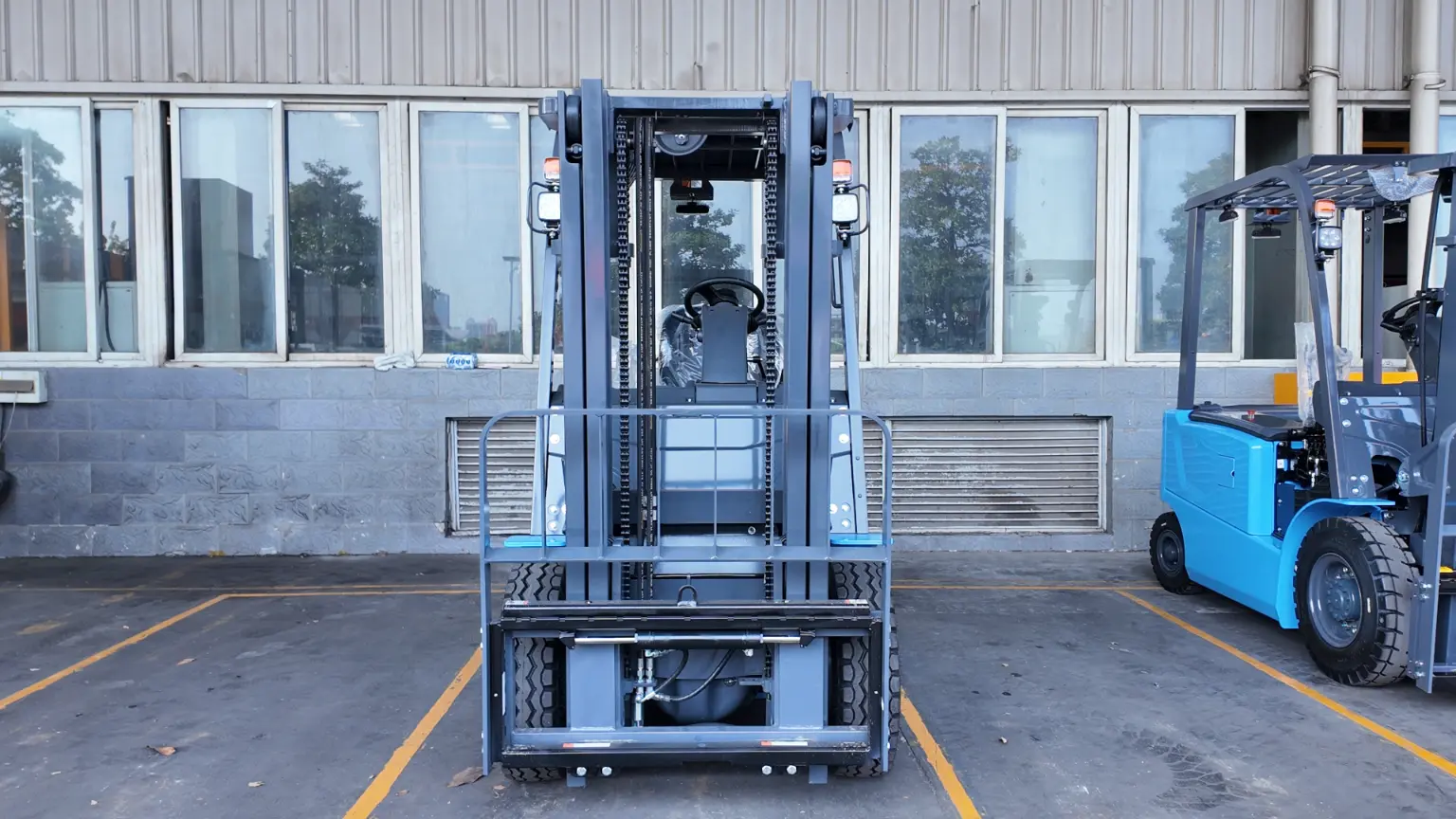
Description
An electric warehouse forklift is a battery-powered material handling machine designed specifically for cargo handling, stacking, loading, unloading, and short-distance transportation in warehouses. Compared with traditional fuel-powered forklifts, an electric warehouse forklift offers low operating noise, zero tailpipe emissions, flexible operation, and relatively simple maintenance. It is particularly suitable for indoor warehouses, logistics and distribution centers, manufacturing facilities, and other working environments with strict requirements for cleanliness and air quality.
With the development of smart warehousing and green logistics, more and more companies are replacing traditional diesel forklifts with electric warehouse forklifts. Depending on load capacity, lifting height, battery type, mast configuration, and working environment, an electric warehouse forklift can meet different material handling requirements, from light-duty transportation to high-level pallet stacking.
Electric Warehouse Forklifts are used in Warehouses.
An electric warehouse forklift is mainly used for indoor warehousing and material handling operations. Depending on the warehouse layout and type of goods, it can perform a wide range of tasks.
First, an electric warehouse forklift is suitable for loading and unloading goods. In warehouse receiving and shipping areas, operators can use the forks to quickly move palletized goods, reducing manual handling and improving loading and unloading efficiency.
Second, an electric warehouse forklift is ideal for pallet stacking and rack storage. In warehouses equipped with standard pallets and storage racks, the forklift can lift goods to different heights and accurately place them on designated rack positions. High-lift electric warehouse forklift models can be used for high-level pallet storage, helping warehouses make better use of vertical space.
Third, an electric warehouse forklift can be used for short-distance transportation inside warehouses. When goods need to be moved from receiving areas to storage areas, or from storage areas to sorting, packing, and shipping zones, an electric warehouse forklift can reduce handling time and labor requirements.
In addition, electric warehouse forklifts are widely used in logistics distribution centers, manufacturing warehouses, food warehouses, pharmaceutical warehouses, electronics warehouses, and retail distribution centers. Because an electric warehouse forklift does not produce fuel-engine exhaust during normal operation, it is particularly suitable for enclosed indoor environments.
For businesses that have strict requirements for hygiene, noise levels, and indoor air quality, an electric warehouse forklift can be an excellent material handling solution.
Benefits of Electric Warehouse Forklifts
Choosing an electric warehouse forklift can provide benefits in terms of operating efficiency, energy consumption, maintenance, workplace conditions, and environmental performance.
1. Zero Tailpipe Emissions
An electric warehouse forklift is powered by a battery and does not produce fuel-engine exhaust during normal operation. This makes the electric warehouse forklift especially suitable for enclosed warehouses and indoor logistics facilities.
2. Low Operating Noise
Compared with fuel-powered forklifts, an electric warehouse forklift generally operates with lower noise levels. In busy warehouses where employees work closely together, lower noise can create a more comfortable working environment and make communication easier.
3. Flexible Operation
An electric warehouse forklift is typically designed with a compact body and a relatively small turning radius, allowing it to maneuver efficiently in narrow warehouse aisles. This flexibility is particularly valuable in warehouses with dense pallet racks and limited operating space.
4. Relatively Simple Maintenance
The powertrain of an electric warehouse forklift differs from that of a diesel forklift and does not require some traditional engine-related maintenance items, such as engine oil and spark plugs. Regular inspections of the battery, drive system, hydraulic system, tires, brakes, and other components can help maintain reliable performance.
5. Potentially Lower Total Operating Costs
Although the initial purchase price of an electric warehouse forklift should be evaluated based on the specific configuration, companies should also consider long-term energy, maintenance, labor, and downtime costs. Depending on electricity rates and operating conditions, an electric warehouse forklift can help reduce certain ongoing operating expenses.
6. Better Suited to Green Warehousing
As companies place greater emphasis on energy efficiency, emissions reduction, and sustainable supply chains, an electric warehouse forklift can reduce dependence on conventional fuel-powered equipment. It is therefore an important option for businesses developing cleaner and more sustainable warehouse operations.
What is the Difference Between an Electric Warehouse Forklift and a Diesel Forklift?
An electric warehouse forklift and a diesel forklift can both be used for material handling, but they differ significantly in terms of power source, operating environment, noise, maintenance, and operating costs.
In terms of power, an electric warehouse forklift uses a rechargeable battery, while a diesel forklift is powered by a diesel engine. Therefore, an electric warehouse forklift is generally more suitable for indoor warehouses, while diesel forklifts are often selected for outdoor applications or demanding heavy-duty operations.
In terms of emissions, an electric warehouse forklift does not produce fuel-engine exhaust during operation. This gives it a clear advantage in enclosed warehouses. Diesel forklifts produce exhaust emissions and therefore require appropriate ventilation and consideration of applicable workplace safety requirements.
Noise is another important difference. An electric warehouse forklift generally operates more quietly than a diesel forklift because it does not use a conventional combustion engine. If a warehouse requires a relatively quiet working environment, an electric warehouse forklift can be a better choice.
Maintenance requirements are also different. Maintenance of an electric warehouse forklift mainly focuses on the battery, electric drive system, hydraulic system, tires, brakes, mast, and other mechanical and electrical components. A diesel forklift also requires regular maintenance of the engine, oil, filters, fuel system, and related components.
However, diesel forklifts can still have advantages in certain outdoor, uneven-terrain, and continuous heavy-duty applications. Therefore, businesses should not select equipment based solely on the power source. Warehouse conditions, cargo weight, operating hours, floor conditions, and workload should all be considered.
| Comparison | electric warehouse forklift | Diesel Forklift |
|---|---|---|
| Source d'énergie | Batterie | Diesel engine |
| Tailpipe Emissions | No fuel-engine emissions | Produces exhaust emissions |
| Operating Noise | Relatively low | Relatively high |
| Typical Application | Indoor warehouses | Outdoor and heavy-duty applications |
| Maneuverability | Suitable for narrow aisles | Better suited to wider work areas |
| Maintenance | Focuses on battery and mechanical/electrical components | Includes engine and fuel-system maintenance |
| Environmental Performance | Well suited to green warehousing | Generally lower |
Therefore, if a business primarily handles palletized goods, indoor transportation, and rack stacking, an electric warehouse forklift is often a preferred option.
What Factors Should be Considered When Choosing an Electric Warehouse Forklift?
When choosing an electric warehouse forklift, companies should look beyond the purchase price and evaluate the forklift according to actual warehouse requirements.
1. Rated Load Capacity
The first consideration should be the weight of the goods that the forklift will normally handle. The rated capacity of the electric warehouse forklift must meet the actual application requirements. The load center and cargo dimensions should also be considered because they can affect the actual lifting capacity of the forklift.
2. Lifting Height
For warehouses using multi-level storage racks, the required lifting height should be determined according to the highest rack position. The mast configuration and lifting height directly affect the range of applications and should be selected according to the warehouse layout.
3. Warehouse Aisle Width
For narrow-aisle warehouses, special attention should be paid to the overall dimensions, turning radius, and fork dimensions of the electric warehouse forklift. Choosing the right size can help prevent collisions with racks during turning, loading, and unloading.
4. Battery Type and Operating Time
The battery is one of the most important components of an electric warehouse forklift. Companies should select battery capacity and battery type according to daily operating hours, workload, charging conditions, and shift patterns.
If the forklift needs to operate continuously across multiple shifts, businesses should also consider fast-charging solutions, battery-swapping systems, or additional batteries.
5. Safety Features
Safety should always be a key consideration when selecting an electric warehouse forklift. Important features may include mast stability, braking systems, warning lights, horns, operator safety systems, speed control, emergency functions, and other safety protection features.
6. After-Sales Service and Spare Parts
An electric warehouse forklift is normally intended for long-term use, making after-sales support an important purchasing factor. Before placing an order, companies should understand the warranty period, technical support, maintenance response time, and availability of key spare parts.
7. Warehouse Floor and Working Conditions
If the warehouse has a smooth and level floor, a standard electric warehouse forklift configuration may be sufficient. If the floor has slopes, uneven surfaces, or other special conditions, the forklift should be equipped with tires, drive systems, and other components suitable for the actual working environment.
What Tests are Conducted on the Electric Warehouse Forklift Before it is Delivered from the Factory?
To ensure that an electric warehouse forklift performs reliably and safely in actual warehouse operations, professional manufacturers generally conduct multiple inspections and tests before delivery.
First, manufacturers perform appearance and assembly inspections. Technicians inspect the frame, mast, overhead guard, forks, tires, and other components to confirm that they are correctly assembled and free from obvious manufacturing or assembly defects.
Second, the electrical system is tested. The battery connections, electric motor, controller, wiring, switches, and other electrical components are checked to ensure that the electric warehouse forklift can start and operate properly.
Third, manufacturers perform travel and braking tests. The forward and reverse functions, steering system, acceleration, and braking performance are checked to verify that the forklift can move and stop smoothly according to operating requirements.
Fourth, the lifting and lowering functions are tested. Since the mast and hydraulic system are critical components of an electric warehouse forklift, technicians check the lifting, lowering, hydraulic operation, and related functions to ensure reliable performance.
Fifth, manufacturers may conduct rated-load testing according to the equipment’s design specifications and applicable testing requirements. This helps verify the lifting and handling capability of the electric warehouse forklift under specified operating conditions.
In addition, manufacturers may inspect the lights, horn, dashboard, safety switches, emergency functions, and other safety-related components.
Through systematic pre-delivery inspection and testing, manufacturers can help reduce the risk of equipment problems during transportation and actual warehouse operations.
When purchasing an electric warehouse forklift, businesses can also ask the manufacturer about its quality-control procedures, testing standards, inspection records, and available test reports. This provides a more comprehensive way to evaluate product quality before purchase.
Performance Parameters
| Type | Item | unit | Modèle | |||
| Modèle | CPD30 | CPD35 | CPD30 | CPD35 | ||
| Mode | POWERFUL | FUNCTIONAL | ||||
| Features | Rated load | kg | 3000 | 3500 | 3000 | 3500 |
| Load center distance | mm | 500 | 500 | 500 | 500 | |
| Power mode | Lithium | Lithium | Lithium | Lithium | ||
| Driving mode | Seat | Seat | Seat | Seat | ||
| Front overhang | mm | 469 | 484 | 469 | 484 | |
| Wheelbase | mm | 1750 | 1750 | 1750 | 1750 | |
| Poids | Service weight (including battery/excluding battery) | kg | 4535/4325 | 4845/4615 | 4550/4320 | 4860/4630 |
| Axle load (full load, front/rear) | kg | 6745/790 | 7555/790 | 6740/810 | 7560/800 | |
| Axle load (no load, front/rear) | kg | 2045/2490 | 2015/2830 | 2050/2500 | 2020/2840 | |
| Type | Tire type | Pneumatic tire/Solid tyre | Pneumatic tire/Solid tyre | Pneumatic tire/Solid tyre | Pneumatic tire/Solid tyre | |
| Front tire size | 28*9-15PR | 28*9-15PR | 28*9-15PR | 28*9-15PR | ||
| Rear tire size | 200/50-10 | 200/50-10 | 200/50-10 | 200/50-10 | ||
| Number of wheels, front/rear (x=drive wheels) | n | 2/2 | 2/2 | 2/2 | 2/2 | |
| Front wheel tread | mm | 1000 | 1000 | 1000 | 1000 | |
| Rear wheel tread | mm | 970 | 970 | 970 | 970 | |
| Dimensions | Mast tilt angle(FR/RR) | ° | 6/10 | 6/10 | 6/10 | 6/10 |
| Mast lowered height | mm | 2075 | 2075 | 2075 | 2075 | |
| Free lift height | mm | 140 | 140 | 140 | 140 | |
| Lift height | mm | 3000 | 3000 | 3000 | 3000 | |
| Mast height at maximum lift (with backrest) | mm | 4210 | 4210 | 4210 | 4210 | |
| Height of overhead guard | mm | 2180 | 2180 | 2180 | 2180 | |
| Seat SIP point height (to the ground) | mm | 1165 | 1165 | 1165 | 1165 | |
| The height of the traction pin position | mm | 310 | 310 | 310 | 310 | |
| Overall length(with forks) | mm | 3625 | 3660 | 3625 | 3660 | |
| Overall length(without forks) | mm | 2555 | 2590 | 2555 | 2590 | |
| Overall width | mm | 1260 | 1260 | 1260 | 1260 | |
| Backrest, ISO2328 standard | 3 | 3 | 3 | 3 | ||
| Fork size LxWxT | mm | 1070x125x45 | 1070x125x50 | 1070x125x45 | 1070x125x50 | |
| Outer spacing of forks, maximum/minimum | mm | 1100/250 | 1100/250 | 1100/250 | 1100/250 | |
| Ground clearance(Full load, at mast) | mm | 130 | 130 | 130 | 130 | |
| Ground clearance(Full load, at wheelbase Center) | mm | 135 | 135 | 135 | 135 | |
| Minimum right angle stacking aisle width, Pallet1000*1200 (1200 forks placed) | mm | 3929 | 3959 | 3929 | 3959 | |
| Minimum right angle stacking aisle width, Pallet800*1200 (1200 forks placed) | mm | 4129 | 4159 | 4129 | 4159 | |
| Minimum turning radius | mm | 2260 | 2275 | 2260 | 2275 | |
| Performance | Maximum travel speed(full load/no load) | km/h | 15/15 | 15/15 | 18/18 | 18/18 |
| Maximum lift speed(full load/no load) | mm/s | 330/440 | 310/450 | 400/500 | 360/490 | |
| Lowering speed (full load/no load) | mm/s | 400/400 | 400/400 | 400/400 | 400/400 | |
| Maximum drawbar pull(full load/no load) | kN | 16.5/16 | 17.5/17 | 19.5/17.5 | 20/18 | |
| Maximum gradeability(full load/no load) | % | 17/26 | 15/23 | 20/26 | 18/25 | |
| Acceleration time (10 meters) (full load/empty load) | s | 5.7/5.1 | 6.2/5.2 | 5.7/5 | 6.1/5.1 | |
| Batterie | Lithium battery voltage/capacity | V/Ah | 80/202 | 80/202 | 80/230 | 80/230 |
| Lithium battery weight | kg | 215 | 215 | 230 | 230 | |
| Motor and controller | Drive motor power | kW | 17 | 17 | 17 | 17 |
| Lifting motor power | kW | 22 | 22 | 22 | 22 | |
| Way of control | AC | AC | AC | AC | ||
| Others | Driving brake/parking brake | Hydraulic/mechanical | Hydraulic/mechanical | Hydraulic/mechanical | Hydraulic/mechanical | |
| Operating pressure | Mpa | 16 | 16 | 16 | 16 | |
FAQ
1. What applications is an electric warehouse forklift suitable for?
An electric warehouse forklift is mainly suitable for indoor warehouses, logistics centers, manufacturing facilities, retail distribution centers, and other locations where goods need to be frequently transported and stacked. It is particularly advantageous in enclosed environments where emissions and noise need to be minimized.
2. How long can an electric warehouse forklift operate on a single charge?
The actual operating time depends on battery capacity, load weight, working intensity, driving speed, lifting frequency, floor conditions, and other factors. Battery capacity alone cannot determine the exact operating time. Businesses should select the battery configuration based on their actual daily operating hours and workload.
3. Can an electric warehouse forklift be used outdoors?
Some electric warehouse forklift models can be used outdoors for short periods or under specific conditions. However, this depends on the model, tires, chassis, protection design, floor conditions, and weather conditions. If the forklift will be used outdoors on a regular basis, a model specifically designed for outdoor applications should be considered.
4. Is an electric warehouse forklift expensive to maintain?
An electric warehouse forklift does not have a conventional fuel engine or fuel system, so some engine-related maintenance tasks are eliminated. However, regular maintenance is still necessary. Operators should periodically inspect the battery, brakes, tires, hydraulic system, mast, forks, electrical system, and other components.
5. How can I extend the service life of an electric warehouse forklift?
Correct operation, regular maintenance, and proper battery charging are essential for extending the service life of an electric warehouse forklift. Avoid overloading, severe impacts, improper charging, and unsuitable operating conditions. Regular inspections based on the manufacturer’s maintenance recommendations can also help reduce unnecessary component wear.
6. What configuration should I choose when purchasing an electric warehouse forklift?
The configuration should be selected according to rated load capacity, lifting height, warehouse aisle width, daily operating hours, floor conditions, cargo type, and working environment.
If warehouse space is limited, pay particular attention to the forklift’s overall dimensions and turning radius. If the forklift needs to operate continuously across multiple shifts, battery capacity, charging efficiency, and battery-swapping or backup-battery solutions should be carefully considered.
Overall, the electric warehouse forklift has become an important material handling solution for modern warehouses because of its efficiency, maneuverability, low-noise operation, and suitability for cleaner indoor environments.
By selecting the appropriate load capacity, lifting height, battery system, body dimensions, safety features, and configuration, companies can make better use of an electric warehouse forklift in different warehouse environments and improve overall material handling efficiency.
FUNCTION/DEVICE Standard and Options
| Category | Items | Standard & Options |
| Basic items | Pneumatic tyre* | ● |
| Solid tyre | ○ | |
| Single tyre (front wheel) | ● | |
| Double front tyres (front wheels) | ○ | |
| 2th valve | ● | |
| 3th & 4th valve | ○ | |
| 3m duplex mast | ● | |
| Other types and different height masts | ○ | |
| Standard forks | ● | |
| Non-standard forks and attachments | ○ | |
| Standard colors | ● | |
| other colors(customized) | ○ | |
| Security items | Turning speed limit | ○ |
| Reversing handrail with horn switch | ○ | |
| Alarm for speeding at 5km/h | ○ | |
| Alarm for speeding at 8km/h | ○ | |
| Alarm for speeding at 10km/h | ○ | |
| Emergency power-off switch | ● | |
| OPS functions | ● | |
| Seat belt start switch (Seat belt fastening required to start.) | ○ | |
| Multi-way valve overload protection | ● | |
| Dry powder fire extinguisher (2kg) | ○ | |
| Back-up buzzer | ● | |
| Reversing Chinese voice speaker | ○ | |
| Non-universal key | ● | |
| Universal key | ○ | |
| Electronic lifting buffer | ○ | |
| Central wide-angle rearview mirror | ● | |
| Side mirrors + central wide-angle rearview mirror | ○ | |
| Comfort items | Half-enclosed seat | ● |
| Suspension seat | ○ | |
| USB port(5V/1A) | ● | |
| Rotable steering wheel in place | ○ | |
| Synchronous steering | ○ | |
| Steering wheel with handle ball | ● | |
| Fan | ○ | |
| Cab and air conditioner | Cab (including fan + wiper) | ○ |
| heater | ○ | |
| Cooling air conditioner | ○ | |
| heater + Cooling air conditioner | ○ | |
| Front windshield (with wiper) | ○ | |
| Rear windshield | ○ | |
| Rainproof roof | ○ | |
| Overhead guard | Overhead guards of different heights | ○ |
| Overhead guards with protective cover | ○ | |
| Lighting items | Rear LED light | ○ |
| Forward LED red/blue light | ○ | |
| Rear LED red/blue light | ○ | |
| Red/blue light on the left, right and back three sides | ○ | |
| LED flashing warning light | ● | |
| LED rotating warning light | ○ | |
| LED rotating buzzer warning light | ○ | |
| others | REMA320 charging port | ● |
| National standard charging gun | ○ | |
| board charger | ○ | |
| ●Standard; ○Optional; Some non-standard options need to be customized. Please consult the local salesperson before purchasing. | ||
| *Standard solid tyres for 3-3.5ton’s rear wheel |


 FR
FR  EN
EN  EN_AU
EN_AU  EN_NZ
EN_NZ  AR
AR  KO
KO  ES
ES  PT
PT  IT
IT  DE
DE  RU
RU  JA
JA  HU
HU
Avis
Il n’y a pas encore d’avis.